
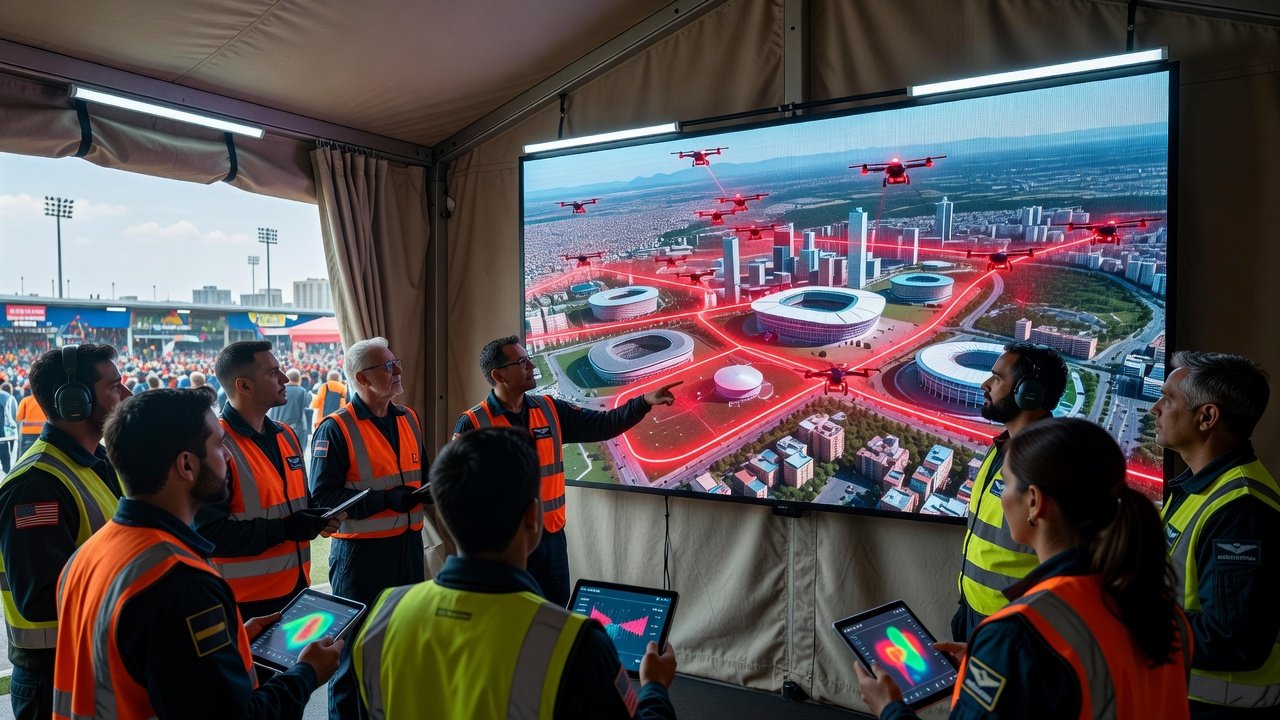
NUSTL Drops a C-UAS Purchasing Tool Just in Time for FIFA 2026
The Department of Homeland Security’s National Urban Security Technology Laboratory (NUSTL) just published a C-UAS Purchasing Tool. It’s designed to help first responders and security agencies pick the right counter-drone gear for the 2026 FIFA World Cup. With 11 host states and the National Capital Region scrambling to spend a $250 million FEMA grant, this tool cuts through vendor marketing noise. If you’re flying FPV near stadiums this summer, expect tighter airspace. NUSTL has been testing counter-UAS systems since 2014, so they know their stuff.
Alice Hong, NUSTL lab director, says the tool provides a data-driven framework to compare vendor offerings. Public safety agencies can now make informed procurement decisions. That means less chance of buying gear that interferes with other systems or creates coverage gaps. For the FPV community, this translates to more coordinated, effective drone detection and mitigation at major events. Don’t be surprised if you see more RF scanners and drone catchers around fan zones.
This tool arrives as DHS gears up for the largest sporting event in history. The World Cup will span multiple cities across North America. With drones becoming a permanent fixture in our airspace, NUSTL aims to empower operators with technical expertise. They want to cut through the marketing hype so agencies invest in capability that genuinely advances security. For us, that means fewer false alarms and more targeted enforcement—good news for responsible pilots.
From White House Lawn to World Cup: A Decade of Counter-UAS Evolution
NUSTL’s counter-UAS journey started in 2014 with the NYPD Counter-Terrorism Bureau. Back then, drones were crashing into Midtown offices and buzzing commercial planes. Then in 2015, a phantom drone landed on the White House lawn. That was a national security flashpoint. At the time, DHS lacked explicit authorities and equipment to mitigate drone threats. Fast forward ten years, and NUSTL is now the lead federal test agent for all DHS-deployed counter-UAS gear.
Today, they’re the primary technical advisor for FEMA’s counter-UAS grant program. The first $250 million tranche already went to World Cup host cities and America250 celebrations. The second $250 million will spread to more communities. NUSTL helps state and local police pick the right systems for their specific needs. They emphasize that equipment alone isn’t enough—coordination between federal, state, local, and private entities is critical. Without it, different counter-UAS kits can interfere with each other.
Hong stresses that coordinated planning, including line-of-sight analysis, RF surveys, and site-specific assessments, is essential. She’s breathing World Cup every day. For FPV pilots, this means if you’re flying anywhere near a host city, expect multi-layered detection. But proper coordination reduces the risk of your gear being falsely flagged. NUSTL is also working with utilities, airports, and correctional facilities to expand this network beyond sports venues.
What This Means for the FPV Community: Fly Smart or Get Grounded
For intermediate FPV builders and pilots, this development signals that counter-UAS tech is becoming more sophisticated and widespread. If you’re planning to fly near World Cup venues, even in uncontrolled airspace, you might encounter RF scanners, drone detection radars, or even mitigation systems. Understanding these tools helps you avoid trouble. NUSTL’s purchasing tool ensures that agencies select effective gear, so you can bet the systems in place will be capable.
Responsible flying is key. Always check temporary flight restrictions (TFRs) before you launch. The 2026 World Cup will likely see extensive no-drone zones around stadiums and fan festivals. Violating them could result in fines or confiscated gear. But the bigger takeaway is that the U.S. is building a permanent counter-UAS infrastructure. The lessons learned from World Cup prep will shape how drones are managed at future events—and maybe even in everyday airspace.
As a community, we should advocate for sensible regulations that distinguish between hobbyist flying and malicious action. NUSTL’s approach is data-driven and focused on security, but it’s not anti-drone. They want to protect events while minimizing interference. By staying informed and flying within guidelines, we can help ensure that FPV remains a vibrant part of the hobby. The tools are coming—be ready to adapt and fly smart.
Quick Facts
- •💡 NUSTL published a C-UAS Purchasing Tool to help agencies pick counter-drone gear for FIFA 2026.
- •💡 FEMA awarded $250 million to 11 World Cup host states and the National Capital Region for counter-UAS systems.
- •💡 NUSTL has been testing counter-UAS tech since 2014, starting with NYPD after a drone landed on the White House lawn in 2015.
- •💡 Alice Hong says coordination between federal, state, local, and private entities is crucial to avoid system interference.
- •💡 NUSTL is expanding counter-UAS protections to utilities, airports, correctional facilities, and commercial real estate.