

Understanding FPV Goggles: The Foundation of Your Flying Experience
FPV goggles represent the most critical component in your first-person view setup, serving as your window into the drone’s perspective. Unlike traditional line-of-sight flying, these specialized displays immerse you directly into the cockpit experience, transforming how you perceive flight dynamics and spatial awareness. The goggle market has evolved dramatically over the past few years, with manufacturers pushing boundaries in resolution, latency reduction, and feature integration. Modern systems now offer everything from basic analog reception to sophisticated digital transmission with recording capabilities and wireless connectivity.
The choice between analog and digital FPV goggles fundamentally shapes your entire flying experience, affecting everything from your budget allocation to the types of aircraft you can effectively pilot. Analog systems continue to dominate racing circuits due to their ultra-low latency characteristics, while digital platforms attract freestyle pilots seeking crystal-clear footage and advanced telemetry integration. Understanding these core differences becomes essential when building your first setup or upgrading existing equipment. The decision impacts not just immediate performance but also long-term compatibility with future aircraft builds and community participation in various flying disciplines.
Analog FPV Goggles: Time-Tested Performance for Racing
Analog transmission remains the gold standard for competitive FPV racing, delivering consistent sub-25ms glass-to-glass latency that digital systems struggle to match. Popular models like the Skyzone Sky04X and Eachine EV800D offer reliable 5.8GHz reception with diversity antenna systems that minimize signal dropouts during aggressive maneuvers. These goggles typically feature 800×480 resolution displays, which may seem modest compared to digital alternatives, but provide perfectly adequate clarity for racing applications where response time trumps image quality. The analog ecosystem benefits from decades of refinement, resulting in robust frequency management and interference mitigation.
The affordability factor makes analog goggles particularly attractive for newcomers, with entry-level options starting around $80 and premium racing models rarely exceeding $400. This cost advantage extends beyond the initial purchase, as analog video transmitters and cameras remain significantly cheaper than digital counterparts. Skyzone’s latest offerings include built-in DVR functionality, head tracking compatibility, and modular receiver designs that accommodate various frequency bands. The simplicity of analog systems also means fewer potential failure points and easier field repairs, crucial advantages during racing events where equipment reliability determines competitive success.

Skyzone vs. Eachine: Analog Market Leaders
Skyzone has established itself as the premium analog goggle manufacturer, with models like the Sky04X Pro offering professional-grade features including HDMI input, wireless receiver modules, and advanced diversity algorithms. Their build quality consistently exceeds budget alternatives, featuring comfortable foam padding, adjustable IPD settings, and durable housing that withstands regular transport and field use. Eachine targets the budget-conscious segment with models like the EV800D providing solid performance at entry-level pricing, though with some compromises in comfort and feature depth. Both manufacturers support standard 5.8GHz frequencies and offer similar receiver sensitivity, making the choice largely dependent on budget constraints and desired feature sets.
Digital FPV Goggles: Crystal Clear Vision with Modern Features
Digital FPV systems have revolutionized the hobby by delivering HD video quality that transforms how pilots perceive their environment and capture footage. DJI’s O3 Air Unit paired with compatible goggles provides 1080p60 transmission with remarkably low latency for digital standards, typically measuring 28-35ms depending on configuration and environmental factors. The Avatar system offers similar performance characteristics while maintaining broader compatibility with third-party components and open-source flight controllers. Digital transmission eliminates the static and interference patterns common in analog systems, providing consistently clean video even at extended ranges or in RF-congested environments.
The feature integration in digital goggles extends far beyond basic video reception, incorporating telemetry overlays, GPS mapping, and sophisticated recording capabilities that analog systems cannot match. Modern digital goggles display real-time flight data including battery voltage, current draw, GPS coordinates, and artificial horizon information directly in your field of view. This telemetry integration proves invaluable for long-range exploration and cinematic filming where precise flight parameter monitoring becomes essential. The recording quality reaches broadcast standards, with some systems capturing 4K footage while simultaneously transmitting lower-resolution video for real-time piloting, effectively replacing separate action cameras for many applications.
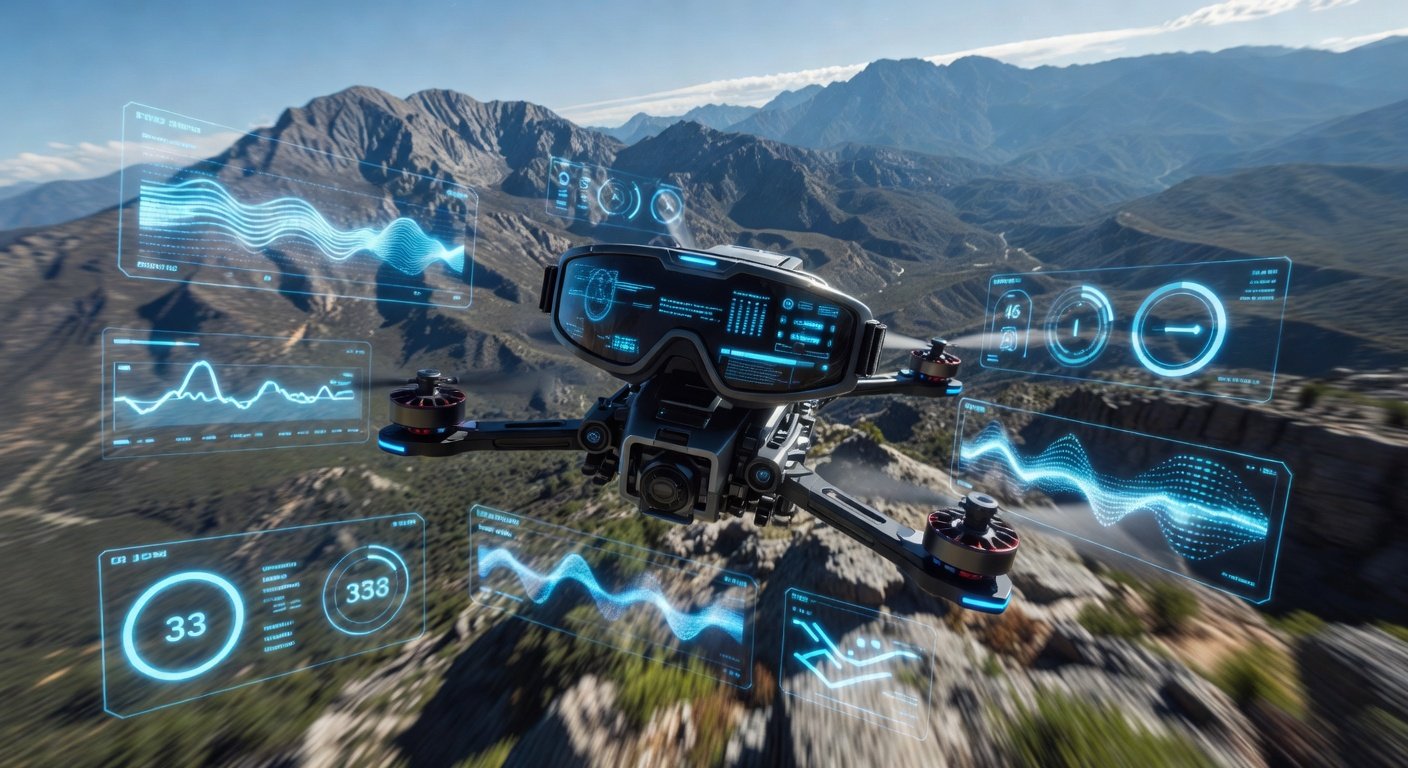
DJI O3 vs. Avatar: Digital Platform Comparison
DJI’s O3 system represents the current pinnacle of digital FPV technology, offering exceptional image quality and feature depth through tight hardware-software integration. The system excels in range performance and signal penetration, with pilots regularly achieving 5+ kilometer flights in optimal conditions. However, this performance comes with ecosystem limitations, as O3 components work exclusively within DJI’s closed platform, restricting customization options and third-party integration. Avatar systems provide more flexibility for custom builds and open-source compatibility while delivering comparable video quality and latency performance. The choice often depends on whether you prioritize maximum performance and polish (DJI) or flexibility and community support (Avatar).
Latency Analysis: Real Numbers That Impact Performance
Latency measurements reveal the fundamental performance differences between analog and digital systems, with implications extending beyond simple numbers to actual flying experience. High-quality analog systems consistently achieve 20-25ms glass-to-glass latency, measured from camera sensor to goggle display, providing near-instantaneous response for rapid control inputs during racing or acrobatic flying. Digital systems typically range from 28-40ms depending on configuration, with DJI O3 averaging 30-32ms and Avatar systems falling within 35-38ms under optimal conditions. These differences may seem minimal, but become noticeable during high-speed maneuvers where split-second timing determines success or failure.
Environmental factors significantly impact digital latency more than analog systems, with RF interference, temperature fluctuations, and processing load affecting transmission timing. Digital systems perform complex encoding and decoding operations that introduce variable delays, while analog transmission remains relatively consistent regardless of external conditions. Professional racing pilots often report difficulty adapting to digital latency after extensive analog experience, particularly in tight technical courses where precise timing becomes critical. However, recreational pilots and cinematic applications rarely notice these differences, making latency considerations highly dependent on intended use cases and personal sensitivity to response delays.
Field of View and Display Technology Considerations
Field of view specifications dramatically influence immersion levels and spatial awareness during flight, with modern FPV goggles offering ranges from 25 degrees to over 50 degrees depending on design philosophy and target applications. Wider fields of view enhance peripheral vision and environmental awareness, particularly beneficial for freestyle flying and cinematic work where spatial orientation becomes crucial. However, extremely wide FOV can cause distortion artifacts and eye strain during extended sessions, leading many manufacturers to target the 35-42 degree sweet spot that balances immersion with comfort. Display technology choices between OLED and LCD panels further impact visual quality, with OLED offering superior contrast ratios and color accuracy at the expense of potential burn-in concerns.
Resolution considerations extend beyond simple pixel counts to include factors like pixel density, refresh rates, and color reproduction that collectively determine visual quality. Modern digital goggles typically feature 1920×1080 displays per eye, while analog systems often utilize 800×480 or 854×480 panels that prove adequate for their intended applications. The relationship between resolution and field of view creates trade-offs in perceived sharpness, with higher resolution displays maintaining clarity across wider viewing angles. Interpupillary distance adjustment mechanisms accommodate different facial structures and ensure proper optical alignment, preventing eye strain and maximizing visual comfort during extended flying sessions.
Comfort and Ergonomics for Extended Sessions
Extended flying sessions demand careful attention to goggle comfort and ergonomic design, as poorly fitted equipment can cause headaches, neck strain, and reduced situational awareness. Premium goggles incorporate adjustable head straps, cushioned contact surfaces, and balanced weight distribution that minimizes pressure points during multi-hour sessions. Ventilation design prevents lens fogging and reduces heat buildup, particularly important when flying in warm conditions or during intense concentration periods. The ability to accommodate prescription glasses or diopter adjustments ensures clear vision for pilots with visual corrections, eliminating the need for contact lenses or compromised visual acuity.
Price-to-Performance Analysis Across Budget Tiers
Budget allocation for FPV goggles requires careful consideration of performance requirements versus available resources, with clear performance tiers emerging across different price ranges. Entry-level analog goggles ($80-150) provide basic functionality suitable for learning and casual flying, though often with compromises in build quality, receiver sensitivity, and feature depth. Mid-range options ($200-400) offer significant improvements in comfort, display quality, and reliability that justify the increased investment for regular pilots. Premium goggles ($500+) target serious enthusiasts and professionals requiring maximum performance, advanced features, and long-term durability.
Digital systems command higher prices across all categories, with entry-level digital goggles starting around $300 and premium systems exceeding $800 when including necessary transmitter components. The total system cost comparison reveals that digital setups typically cost 2-3x more than equivalent analog configurations, though this gap continues narrowing as digital technology matures and production scales increase. Value propositions vary significantly based on intended use, with racing pilots often finding premium analog systems offer better cost-effectiveness, while cinematic applications strongly favor digital investments despite higher initial costs.
Long-term Investment Considerations
Future-proofing your goggle investment requires understanding technology trends and ecosystem evolution within the FPV community. Digital systems continue advancing rapidly with regular firmware updates, new features, and improved performance, suggesting stronger long-term value despite higher initial costs. Analog technology has reached maturity with minimal ongoing development, though this stability provides predictable performance and broad compatibility. Consider upgrade paths, component availability, and community support when making long-term purchasing decisions, as these factors significantly impact total ownership costs over multiple years of active flying.
Frequently Asked Questions
What’s the real latency difference between analog and digital FPV goggles?
Analog systems achieve 20-25ms glass-to-glass latency, while digital systems range from 28-40ms. This 10-15ms difference is noticeable during racing but negligible for freestyle or cinematic flying.
Are digital FPV goggles worth the extra cost?
Digital goggles provide superior image quality, recording capabilities, and telemetry integration but cost 2-3x more than analog. They’re worth it for cinematic work and long-range flying, less critical for racing.
Can I use analog goggles with digital video transmitters?
No, analog goggles only receive analog 5.8GHz signals. Digital transmission requires compatible digital goggles or receivers. The systems are not cross-compatible.
Which FPV goggles are best for beginners?
Entry-level analog goggles like the Eachine EV800D offer the best value for beginners, providing adequate performance at low cost while learning basic flying skills.
How important is field of view in FPV goggles?
Field of view affects immersion and spatial awareness. 35-42 degrees provides the best balance of immersion and comfort, while wider FOV can cause eye strain during extended sessions.
Ready to Choose Your Perfect FPV Goggles?
Selecting the right FPV goggles transforms your flying experience from basic control to true immersion. Whether you’re drawn to the lightning-fast response of analog systems or the crystal-clear quality of digital platforms, the perfect goggles await your discovery. Our team has tested every major model across all price ranges and can guide you toward the ideal setup for your specific flying style and budget. Contact us today for personalized recommendations that match your goals and help you make the most of your FPV investment.