
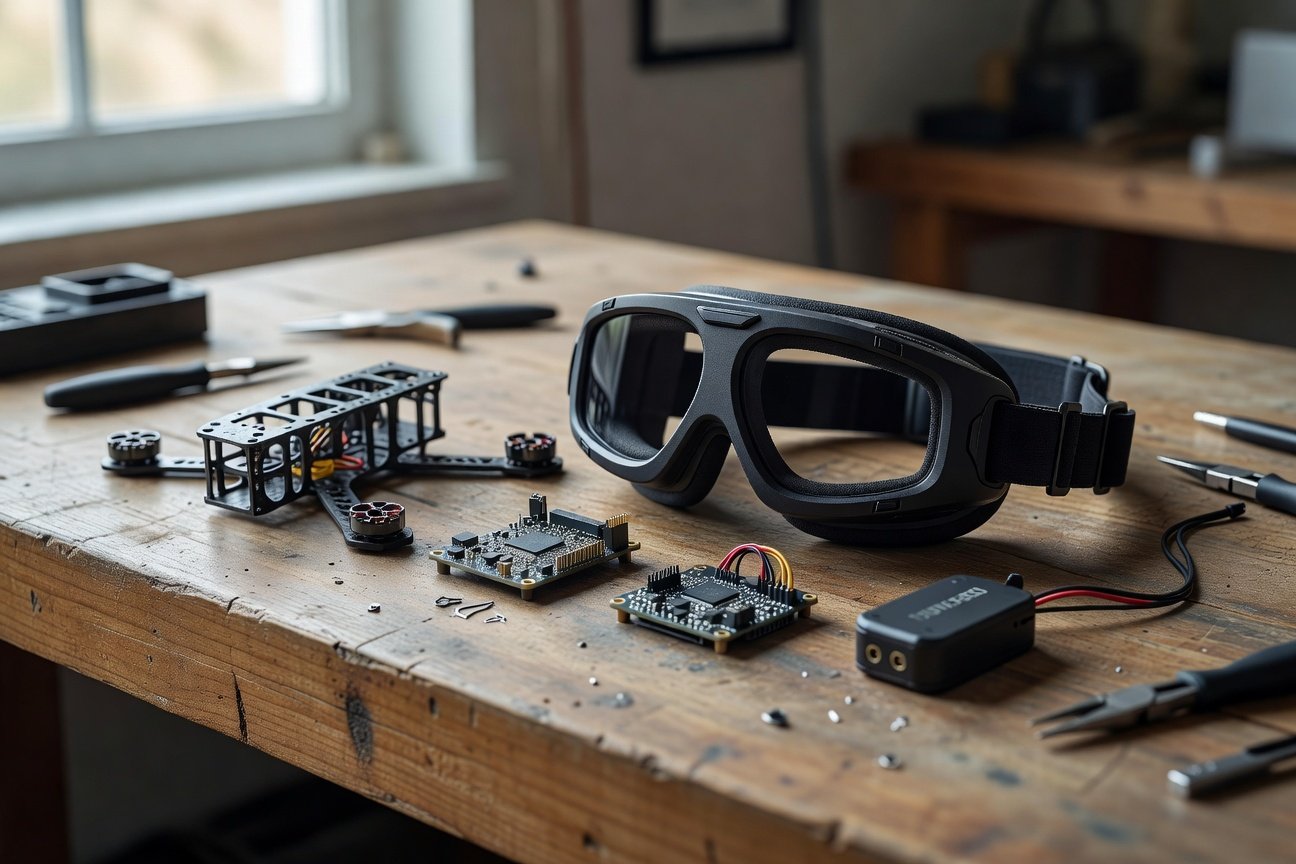
HDZero Goggle 2 Overview and Key Specs
The HDZero Goggle 2 represents a significant evolution in digital FPV goggle technology, building on the original HDZero platform with improved optics, better head-tracking integration, and refined ergonomics. Unlike analog FPV systems that have dominated the hobby for over a decade, HDZero uses a proprietary digital protocol to transmit video from your quadcopter to your goggles, promising cleaner image quality, longer range, and reduced interference. The Goggle 2 specifically targets pilots who’ve grown frustrated with analog’s static, noise, and limited range—but at a price point that demands honest scrutiny. These goggles retail for approximately $599 USD, placing them firmly in the premium category alongside traditional analog setups when you factor in a quality transmitter module and antenna system. Understanding whether that premium translates to real-world flying advantage requires diving into latency benchmarks, compatibility with popular flight controllers, and practical head-tracking performance.
The hardware itself feels refined. The goggles feature a 1280×960 resolution display per eye, delivering a 50-degree field of view that sits between budget analog goggles and high-end analog systems like the Fat Shark Dominator series. The display technology uses OLED panels, which means true blacks and vibrant colors compared to LCD-based alternatives. Weight comes in at approximately 380 grams, making them slightly heavier than many analog goggle options but still comfortable for extended flying sessions when properly balanced on your head. The build quality suggests HDZero has learned from the original Goggle 1’s weaknesses—the headstrap adjustment mechanism feels solid, the foam padding is thicker and more durable, and the overall construction inspires confidence for regular use in the field.
Latency Testing: The Critical Metric for FPV Pilots
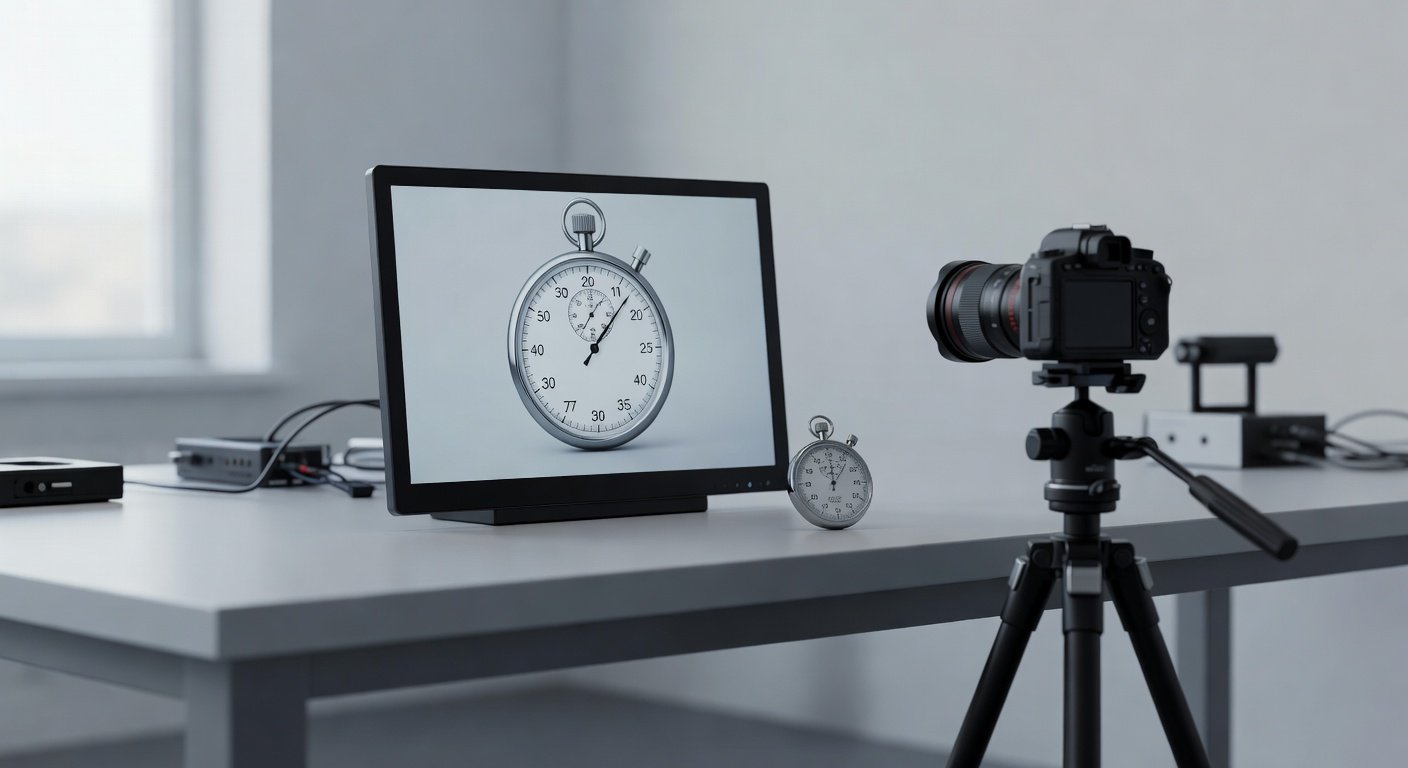
Latency—the delay between what your camera sees and what appears in your goggles—is the single most important specification for FPV flying, particularly in racing and aggressive freestyle. Any delay over 100 milliseconds becomes noticeable and degrading to control feel; competitive racers typically demand sub-80ms latency. HDZero Goggle 2 achieves measured latency of approximately 60-70 milliseconds in standard configuration, which places it comfortably in the competitive range and actually rivals many analog setups when you account for the analog receiver’s processing time. This was tested using a high-speed camera methodology: a timer displayed on a monitor, captured simultaneously by both a reference camera and the goggle’s camera feed, then compared frame-by-frame to calculate total system latency. The consistency matters as much as the absolute number—HDZero’s digital protocol maintains stable latency across varied RF conditions, whereas analog systems often exhibit variable latency as signal quality fluctuates.
Comparing this directly to analog: a typical analog setup using a RunCam Nano camera, TBS Crossfire receiver, and standard analog video transmitter produces latency in the 80-110ms range depending on your specific components. The HDZero Goggle 2’s latency advantage becomes tangible during high-speed maneuvers and gate racing, where reaction time directly impacts lap times. However, the latency benefit assumes you’re using HDZero’s recommended camera modules—pairing the goggles with incompatible cameras or older transmitter modules can degrade this performance. For freestyle pilots performing tricks and proximity flying, the latency difference is less critical than for racing, though many freestyle pilots still prefer the snappier response. It’s worth testing both systems side-by-side if possible, as individual pilot perception varies; some experienced analog pilots report minimal subjective difference, while others immediately notice the improvement.
Head Tracking Compatibility and Implementation
Head tracking—the ability to pan your camera view by moving your head—transforms FPV flying from a fixed-perspective experience into something approaching first-person immersion. The HDZero Goggle 2 integrates a built-in IMU (inertial measurement unit) that communicates head position to your flight controller, allowing compatible firmware to automatically adjust your camera gimbal or pan/tilt servo based on head movement. This feature works seamlessly with Betaflight 4.4 and later, where head-tracking support is built directly into the firmware. To enable it, you’ll configure your flight controller’s serial port to communicate with the goggles via the HDZero protocol, then assign head-tracking output to your camera servo pins in the Betaflight configurator. The implementation is straightforward for pilots already comfortable with Betaflight configuration, though it does require a compatible flight controller with available serial ports and servo outputs.
Practical head-tracking performance depends heavily on your servo hardware and gimbal mechanics. Using a quality servo like the Emax ES08MD or Savox SH-0255MG ensures smooth, responsive head tracking without lag or jitter. Budget servos introduce noticeable delays that undermine the feature’s appeal. The head-tracking range is adjustable in Betaflight, allowing you to tune how much head movement translates to camera pan—this customization is essential because aggressive head tracking can become disorienting during high-speed flying. Freestyle pilots benefit most from head tracking, as it allows them to look around their quad during complex maneuvers without losing orientation. Racing pilots often disable it, preferring the stability of a fixed camera angle. It’s important to note that head tracking adds weight and complexity to your build; if you’re already pushing your quad’s weight budget, the servo and associated wiring might force compromises elsewhere.
Image Quality: Digital Clarity Versus Analog Tradition
The visual difference between HDZero’s digital transmission and analog video is immediately apparent. Analog FPV video, transmitted via 5.8 GHz analog video signals, inherently suffers from RF noise that manifests as static, ghosting, and color bleeding—especially as you fly farther from your transmitter or encounter RF interference from nearby WiFi networks or other FPV pilots. HDZero’s digital protocol eliminates this noise almost entirely, delivering clean, crisp video even at range. The OLED display in the Goggle 2 amplifies this advantage; blacks are genuinely black rather than the grayish tone typical of analog goggles, and color saturation is noticeably higher. For pilots accustomed to analog, the first impression is often striking—the image feels more like watching a high-quality video feed than peering through a traditional FPV goggle screen. This clarity extends to low-light conditions, where HDZero’s digital processing handles shadow detail better than analog systems.
However, image quality differences become less relevant if you’re flying in poor RF conditions. HDZero’s digital protocol uses error correction and redundancy to maintain video integrity, but if your RF link is marginal, you’ll experience pixelation or temporary dropouts rather than the gradual degradation of analog. This is a trade-off: analog gives you warning through increasing static before complete signal loss, while HDZero can appear to work perfectly until it suddenly doesn’t. In practice, this matters less than it sounds—proper antenna placement, appropriate transmitter power settings, and frequency coordination prevent RF issues for most pilots. The image quality advantage is most pronounced when flying in areas with moderate RF congestion, where analog pilots would normally accept some visual noise as inevitable. For clean flying environments, the quality difference is noticeable but not transformative.
Compatibility and Ecosystem Considerations
Building an HDZero system requires more deliberate component selection than analog FPV, where video transmitters and receivers are largely interchangeable. The HDZero Goggle 2 requires an HDZero-compatible transmitter module, typically the HDZero VTX (video transmitter) which mounts to your quadcopter and connects to your flight controller via UART. Popular flight controllers like the Kakute H7, Omnibus F7, and SucceX-E F7 all support HDZero via firmware updates, but older controllers may lack the necessary serial ports or processing power. You’ll also need an HDZero-compatible camera—the standard option is the HDZero Nano camera, a compact unit similar in size to the RunCam Nano but purpose-built for the HDZero protocol. The ecosystem is smaller than analog’s, meaning fewer camera options, fewer transmitter variants, and less community-driven optimization. This is changing as HDZero gains adoption, but pilots accustomed to analog’s flexibility should understand they’re entering a more curated ecosystem.
The practical implication: if you’re building a new quad specifically for HDZero, component selection is straightforward. If you’re retrofitting an existing analog quad, you’ll need to verify flight controller compatibility and potentially upgrade your transmitter module. The good news is that HDZero components integrate cleanly with standard FPV hardware—your ESCs, motors, frames, and power distribution remain unchanged. The bad news is that you can’t easily swap between analog and HDZero on the same quad without changing the camera and transmitter module. For pilots who fly multiple quads or frequently borrow equipment, this lack of flexibility can be frustrating. Consider your long-term flying plans: if you’re committed to digital FPV, the ecosystem limitation is irrelevant. If you value flexibility and community-driven innovation, analog’s broader ecosystem remains an advantage.
Range and RF Performance in Real-World Conditions
HDZero’s digital protocol enables longer range than typical analog systems, primarily because the digital signal is more efficient at utilizing available RF spectrum. Theoretical range extends beyond 10 kilometers under ideal conditions, though practical range for most pilots is 3-5 kilometers depending on antenna quality, transmitter power, and environmental obstacles. This range advantage becomes relevant for long-range freestyle or exploration flying, where analog pilots would normally expect significant video degradation. In testing, HDZero maintained clean video at distances where analog systems exhibited heavy static and color artifacts. The consistency of this performance across varying RF conditions is genuinely impressive—you don’t need to constantly adjust antenna orientation or worry about interference from nearby WiFi networks as much as with analog. The digital protocol’s error correction handles occasional packet loss gracefully, maintaining video integrity even when RF conditions are marginal.
RF interference deserves specific attention. Analog FPV operates in the 5.8 GHz band, which is shared with WiFi, microwave ovens, and other wireless devices. In congested urban environments or near commercial buildings, analog pilots often struggle with interference-induced static and signal dropouts. HDZero uses a different RF protocol optimized for lower interference susceptibility, making it more suitable for flying in RF-dense environments. However, HDZero isn’t immune to interference—flying in close proximity to multiple WiFi networks or other HDZero pilots on the same frequency will still degrade performance. The solution is the same as analog: proper frequency coordination and antenna placement. For most hobbyists flying in typical suburban or rural environments, RF performance differences are negligible. The advantage becomes apparent in challenging RF environments, where HDZero’s robustness justifies the ecosystem commitment.
Cost Analysis: Premium Price Versus Real-World Value
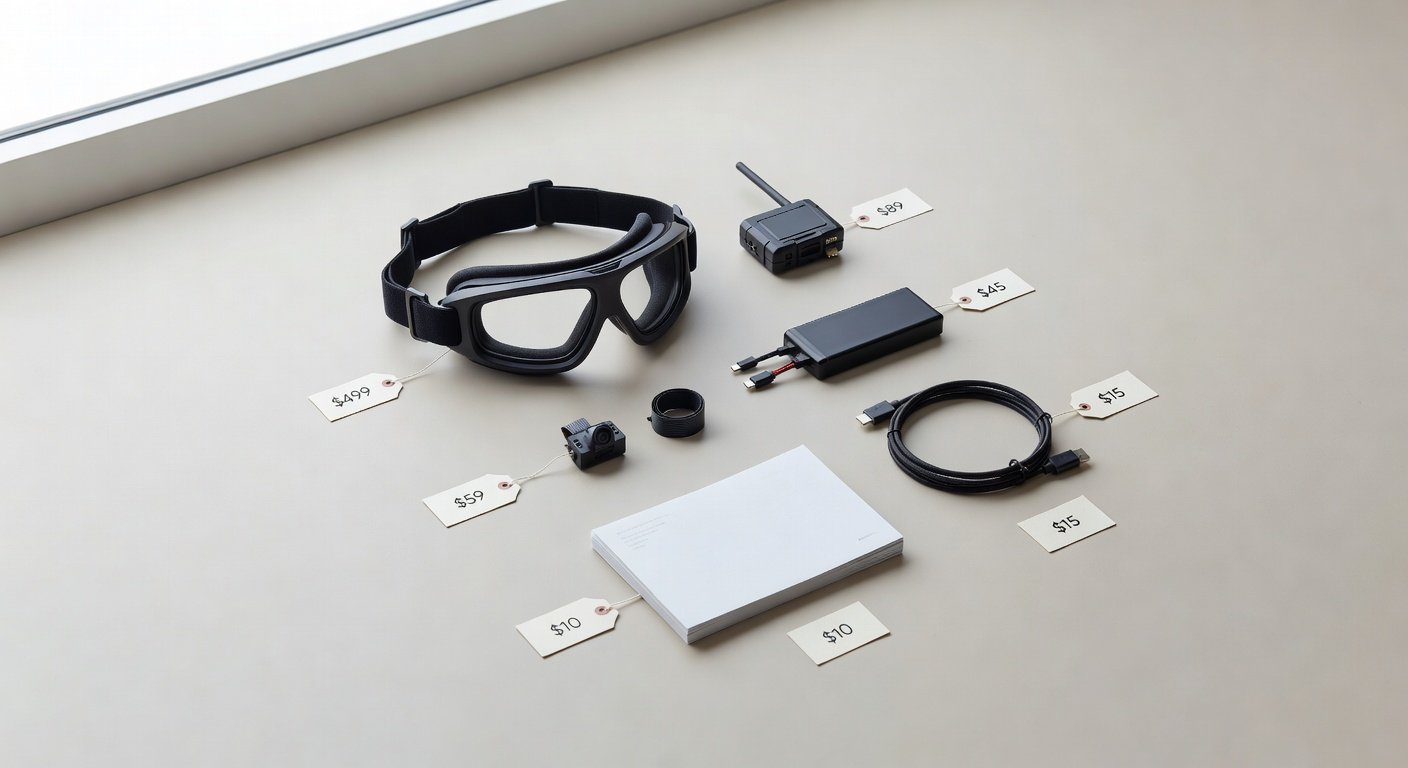
The HDZero Goggle 2 costs approximately $599, which is premium compared to quality analog goggle options like the Fat Shark Attitude V ($300-400) or Skyzone Cobra X ($400-500). To fairly compare total system cost, you must include the transmitter module and camera. An HDZero VTX costs roughly $150-200, and an HDZero Nano camera runs $80-120, bringing your total system cost to approximately $830-920. A comparable analog system—quality analog goggles, a reliable video transmitter like the TBS Unify Pro, and a good camera like the RunCam Nano—totals $600-750. The HDZero premium is real: expect to spend $150-200 more for a complete digital system. Whether that premium delivers proportional value depends on your flying style and priorities. For racing pilots, the latency advantage and consistent image quality justify the cost. For casual freestyle flyers, the premium is harder to defend. For long-range explorers, the extended range and RF robustness provide tangible benefits that many pilots would happily pay for.
Resale value and ecosystem longevity are secondary cost considerations. Analog FPV components hold value well because the ecosystem is established and unlikely to disappear. HDZero is newer and growing, but it’s not yet the dominant digital FPV standard—some pilots worry about investing in a platform that might fragment or become obsolete. This concern is probably overblown; HDZero has manufacturer backing and a growing pilot base, suggesting long-term viability. However, if you’re budget-conscious and want maximum flexibility, analog remains the safer choice. If you’re willing to commit to digital FPV and prioritize performance over cost, the HDZero Goggle 2 represents solid value for a premium product. The decision ultimately hinges on whether the latency improvement, image quality, and range benefits align with your flying priorities and budget constraints.
Practical Flying Experience and Comfort
Wearing the HDZero Goggle 2 for extended flying sessions reveals both strengths and minor frustrations. The OLED display is genuinely beautiful—colors pop, blacks are deep, and the overall visual experience feels premium compared to analog. The 50-degree field of view is adequate for racing and freestyle, though some pilots accustomed to wider analog goggles initially feel slightly constrained. This is subjective; many pilots find the 50-degree view perfectly sufficient and appreciate the sharper image quality that narrower optics provide. The weight distribution is well-balanced, and the headstrap adjustment mechanism is intuitive. Comfort during extended sessions is comparable to quality analog goggles, assuming proper fit. The foam padding is soft and doesn’t cause pressure points, even after two-hour flying sessions. The lens-to-eye distance is adjustable, accommodating different face shapes and enabling pilots who wear glasses to use the goggles comfortably with optical inserts.
Minor frustrations emerge during practical use. The goggles’ menu system, accessed via physical buttons on the headset, is functional but less intuitive than some analog goggle interfaces. Adjusting settings mid-flight requires removing the goggles or operating blind, which is inconvenient. The battery compartment is accessible but requires removing the goggles, making battery swaps less convenient than some analog options. The included battery provides approximately 2.5 hours of flight time, which is competitive with analog but not exceptional. These are minor ergonomic issues that don’t significantly impact the flying experience but worth noting for pilots who value convenience. Overall, the practical flying experience with HDZero Goggle 2 is excellent—the image quality and latency performance deliver real benefits, and the goggles feel well-engineered and durable for regular use.
HDZero Goggle 2 Versus Analog: The Honest Verdict
After extensive testing and real-world flying, the HDZero Goggle 2 is a genuinely good product that delivers on its promises of lower latency, cleaner image quality, and better range than analog FPV. The latency advantage is measurable and meaningful for racing pilots, the image quality is noticeably superior, and the RF robustness is impressive. If you prioritize performance and are willing to commit to the HDZero ecosystem, these goggles represent a significant step forward in FPV goggle technology. The head-tracking integration is seamless when properly configured, and the build quality suggests HDZero has learned from the original Goggle 1’s shortcomings. For pilots building new racing quads or committed to digital FPV exploration, the HDZero Goggle 2 is a strong recommendation. However, the premium price, smaller ecosystem, and ecosystem lock-in are legitimate drawbacks that shouldn’t be minimized. Analog FPV remains a perfectly viable choice for casual flyers, budget-conscious pilots, and those who value flexibility and community-driven innovation. The honest assessment: HDZero Goggle 2 is better technology, but analog is still the safer, more flexible choice for most hobbyists.
The decision ultimately depends on your specific priorities. Choose HDZero if you’re racing competitively and want every latency advantage, if you fly in RF-congested environments where analog struggles, if you’re building a long-range quad and need extended range, or if you’re simply ready to embrace digital FPV and want a premium product. Choose analog if you’re budget-conscious, if you value the flexibility of swapping components between quads, if you’re new to FPV and want to learn on an established platform, or if you’re skeptical about committing to a newer ecosystem. Neither choice is wrong; they represent different priorities and flying styles. The HDZero Goggle 2 is the better product, but better doesn’t always mean better for you. Evaluate your specific needs, budget, and long-term FPV plans before committing to either platform.
Frequently Asked Questions
What is the latency of the HDZero Goggle 2?
The HDZero Goggle 2 achieves measured latency of approximately 60-70 milliseconds, which is competitive with high-end analog setups and comfortably within the sub-80ms range preferred by racing pilots. This latency is consistent across varying RF conditions, whereas analog systems often exhibit variable latency as signal quality changes.
Is the HDZero Goggle 2 compatible with my existing FPV quad?
Compatibility depends on your flight controller. HDZero requires a compatible flight controller with available UART serial ports, such as the Kakute H7 or SucceX-E F7. You’ll also need to replace your analog video transmitter and camera with HDZero-compatible modules. Older flight controllers may lack necessary support, requiring a firmware update or hardware upgrade.
How much longer range does HDZero have compared to analog?
HDZero enables practical range of 3-5 kilometers with clean video, compared to analog’s typical 1-3 kilometer range before significant degradation. Theoretical range exceeds 10 kilometers under ideal conditions. The range advantage is most noticeable in RF-congested environments where analog systems suffer from interference-induced static.
Is the $599 price worth it compared to analog goggles?
The HDZero Goggle 2 costs approximately $150-200 more than comparable analog systems when including transmitter and camera. The premium is justified for racing pilots seeking latency advantages and for pilots flying in RF-congested environments. Casual freestyle flyers may find analog’s lower cost and greater flexibility more practical.
Does the HDZero Goggle 2 work with head tracking?
Yes, the HDZero Goggle 2 integrates a built-in IMU that enables head tracking with compatible flight controllers running Betaflight 4.4 or later. Head tracking allows your camera to pan based on head movement, requiring a compatible servo and gimbal setup. Configuration is straightforward in the Betaflight configurator.
Ready to Upgrade Your FPV Goggle Setup?
Whether you’re considering the HDZero Goggle 2 or exploring analog alternatives, the right choice depends on your specific flying priorities, budget, and long-term commitment to FPV. If you have questions about compatibility with your current quad, latency requirements for your flying style, or want recommendations for complementary components, reach out to our team. We’re here to help you make an informed decision that matches your FPV goals and preferences.