

The Science Behind How LiPo Batteries Explode
Understanding how LiPo batteries explode begins with examining their internal chemistry and construction. Lithium Polymer batteries contain highly reactive lithium compounds suspended in an electrolyte gel, separated by thin polymer membranes. When these batteries fail catastrophically, the process typically involves thermal runaway – a chain reaction where increasing temperatures cause accelerated chemical reactions, generating more heat and potentially leading to fire or explosion. The electrolyte becomes unstable at elevated temperatures, breaking down and releasing flammable gases including hydrogen fluoride, carbon monoxide, and various organic compounds. This gas buildup creates internal pressure that can rupture the battery casing, sometimes violently ejecting burning materials and toxic fumes.
The explosive potential of LiPo batteries stems from their high energy density and the volatile nature of their chemical components. Unlike traditional batteries, LiPo cells store significant electrical energy in a compact form factor, making them popular for drones, RC vehicles, and portable electronics. However, this concentrated energy becomes dangerous when released uncontrollably. The polymer separator that prevents direct contact between positive and negative electrodes can deteriorate due to overheating, overcharging, or physical damage. Once this barrier fails, internal short circuits occur, generating intense heat that vaporizes the electrolyte and creates an explosive mixture of gases and superheated materials that can ignite spontaneously.
Primary Causes That Lead to LiPo Battery Explosions
Overcharging represents the most common trigger for how LiPo batteries explode, occurring when voltage exceeds the manufacturer’s specified limits. Standard LiPo cells should never exceed 4.2 volts per cell, yet faulty chargers or user error can push voltages higher, destabilizing the internal chemistry. During overcharging, lithium metal begins plating on the anode surface, creating dendrites – microscopic metallic growths that can pierce the separator membrane. This process generates excessive heat while simultaneously weakening the battery’s internal structure. The combination of elevated temperature, compromised separators, and continued electrical stress creates ideal conditions for thermal runaway. Many explosions occur during charging cycles when users leave batteries unattended with inadequate charging equipment or incorrect voltage settings.
Physical damage and manufacturing defects constitute another major pathway for LiPo battery failures. Impact damage from crashes, punctures from sharp objects, or excessive bending can compromise the internal structure and create immediate fire hazards. Manufacturing inconsistencies such as contaminated materials, improper separator thickness, or inadequate quality control can create latent defects that manifest as sudden failures months after purchase. Temperature extremes also contribute significantly to explosion risk – exposure to high ambient temperatures accelerates chemical degradation, while rapid temperature changes can cause internal components to expand and contract at different rates, potentially damaging delicate separators. Age-related deterioration compounds these risks as repeated charge cycles gradually degrade the polymer structure and electrolyte stability.
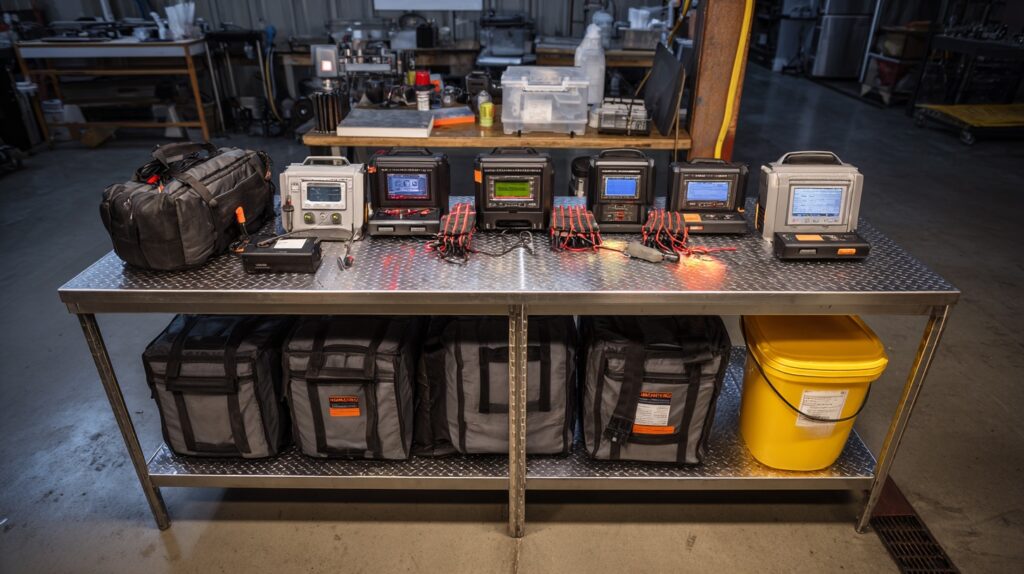
Proper LiPo charging station with safety equipment to prevent explosions
Thermal Runaway: The Chain Reaction Process
Thermal runaway represents the critical mechanism through which LiPo batteries transition from stable operation to explosive failure. This process begins when internal temperatures reach approximately 130°C (266°F), triggering exothermic reactions that generate additional heat faster than the battery can dissipate it. The polymer separator starts breaking down at these temperatures, allowing direct contact between electrodes and creating internal short circuits. These shorts generate more heat, accelerating the breakdown of remaining separators and electrolyte components. As temperatures climb beyond 200°C (392°F), the electrolyte begins decomposing rapidly, producing flammable gases including hydrogen, methane, and various organic vapors. The battery swells as gas pressure builds internally, and if the casing ruptures, these superheated gases can ignite explosively when exposed to oxygen.
How LiPo Batteries Explode During Charging
Charging represents the highest-risk period for LiPo battery explosions because electrical energy input can rapidly escalate minor problems into catastrophic failures. During normal charging, lithium ions migrate from cathode to anode while the battery management system monitors voltage and temperature. However, when charging parameters exceed safe limits, this controlled process becomes unstable. Overcharging forces excess lithium ions toward an already saturated anode, causing lithium metal plating that generates heat and creates internal shorts. Fast charging compounds these risks by increasing current flow, which elevates internal temperatures and stresses the separator materials. Many users inadvertently create dangerous conditions by using incorrect charger settings, charging damaged batteries, or failing to monitor the charging process adequately.
The explosive charging failures often occur without warning, particularly with older or previously damaged batteries. A battery that appears functional may harbor internal damage from previous overcharging, physical impacts, or manufacturing defects that only manifest under the electrical stress of charging. Temperature monitoring becomes critical during charging because even slight overheating can indicate developing problems. Batteries that become warm during charging beyond normal parameters are experiencing internal resistance issues that can rapidly progress to thermal runaway. The charging environment also affects explosion risk – charging in enclosed spaces, near flammable materials, or on surfaces that retain heat can transform a minor battery failure into a significant fire hazard.
Warning Signs Before Explosive Failure
Recognizing early warning signs can prevent many LiPo battery explosions by allowing users to safely discontinue use before catastrophic failure occurs. Physical swelling represents the most obvious indicator of internal problems, as gas buildup from electrolyte breakdown causes the battery casing to expand. Any visible puffing or bulging indicates serious internal damage and immediate fire risk. Unusual heat generation during charging or use signals internal resistance problems that can rapidly escalate to thermal runaway. Batteries should remain relatively cool during normal operation, so noticeable warmth warrants immediate attention. Voltage irregularities, such as cells that charge to different levels or discharge at dramatically different rates, indicate internal damage that compromises safety. Strange odors, particularly sweet or chemical smells, suggest electrolyte leakage or decomposition that precedes explosive failure.
Prevention Strategies and Safety Measures
Preventing LiPo battery explosions requires implementing comprehensive safety protocols that address charging, storage, handling, and disposal practices. Proper charging equipment represents the foundation of battery safety – using quality chargers with accurate voltage regulation, temperature monitoring, and automatic shutoff features dramatically reduces explosion risk. Balance charging ensures all cells within a battery pack maintain equal voltage levels, preventing individual cell overcharging that can trigger thermal runaway. Charging should always occur in fireproof containers or dedicated charging bags designed to contain potential fires and vent toxic gases safely. Never leave batteries charging unattended, and establish charging areas away from flammable materials with adequate ventilation to disperse any gases released during normal operation.
Storage conditions significantly impact long-term battery safety and explosion prevention. LiPo batteries should be stored at approximately 50% charge in cool, dry environments away from direct sunlight and heat sources. Extreme temperatures accelerate chemical degradation and increase internal pressure, raising explosion risk over time. Regular inspection protocols help identify developing problems before they become dangerous – check batteries monthly for swelling, damage, or voltage irregularities. Proper handling techniques minimize physical damage that can compromise internal structure. Avoid dropping, puncturing, or subjecting batteries to excessive vibration or mechanical stress. When transporting LiPo batteries, use appropriate containers that provide cushioning and prevent short circuits from loose connections or metal objects.
Emergency Response Procedures
When LiPo battery fires or explosions occur, proper emergency response can minimize property damage and personal injury while safely managing toxic gas exposure. Never attempt to extinguish LiPo fires with water, as this can spread burning electrolyte and create additional hazards. Class D fire extinguishers designed for metal fires work best, though sand or dry powder can smother small fires effectively. The primary goal involves containing the fire and preventing spread to surrounding materials while allowing the battery to burn out completely. Evacuate the immediate area and ensure adequate ventilation to prevent toxic gas accumulation. LiPo fires produce hydrogen fluoride, carbon monoxide, and other dangerous compounds that can cause serious respiratory damage. Contact emergency services for significant fires, and never re-enter affected areas until proper ventilation has cleared all chemical vapors.
Understanding LiPo Battery Construction and Failure Points
The internal architecture of LiPo batteries creates specific vulnerability points where failures typically originate, helping explain how these batteries explode under certain conditions. Each cell consists of alternating layers of cathode material (typically lithium cobalt oxide), separator membrane, and anode material (usually graphite), all immersed in electrolyte gel. The separator membrane, often only 20-25 micrometers thick, represents the most critical safety component as it prevents direct electrode contact while allowing lithium ion migration. This ultra-thin barrier can be compromised by mechanical stress, thermal expansion, manufacturing defects, or chemical degradation from repeated charge cycles. When separator integrity fails, internal short circuits create localized heating that rapidly spreads throughout the battery structure.
The flexible pouch construction that gives LiPo batteries their name also contributes to explosion risk compared to rigid cylindrical cells. While the soft polymer casing allows for diverse form factors and lighter weight, it provides less structural containment during thermal runaway events. As internal pressure builds from gas generation, the pouch can rupture suddenly, releasing burning materials and toxic gases in an uncontrolled manner. The current collector tabs that connect internal electrodes to external terminals represent another failure point – poor welds or excessive current can create resistance heating at these connections. Understanding these structural vulnerabilities helps users recognize why seemingly minor damage or improper handling can lead to catastrophic failures that appear disproportionate to the initial cause.

Dendrite formation in LiPo batteries that leads to internal shorts and explosions
Frequently Asked Questions
What causes LiPo batteries to explode?
LiPo batteries explode primarily due to thermal runaway triggered by overcharging, physical damage, manufacturing defects, or extreme temperatures. When internal temperatures exceed 130°C, chemical reactions accelerate uncontrollably, generating heat and flammable gases that can rupture the battery casing explosively.
Can a LiPo battery explode while charging?
Yes, charging represents the highest risk period for LiPo explosions. Overcharging, using incorrect voltage settings, or charging damaged batteries can trigger thermal runaway. Always use proper chargers, monitor charging progress, and charge in fireproof containers away from flammable materials.
What should you do if a LiPo battery catches fire?
Never use water on LiPo fires. Use Class D fire extinguishers, sand, or dry powder to smother flames. Evacuate the area immediately due to toxic gas production, ensure adequate ventilation, and contact emergency services for significant fires. Allow the battery to burn out completely.
Are LiPo batteries safe for drones?
LiPo batteries can be safe for drones when handled properly. Use quality batteries from reputable manufacturers, follow charging protocols, inspect regularly for damage or swelling, and replace batteries showing signs of deterioration. Proper handling dramatically reduces explosion risk.
Need Expert Battery Safety Consultation?
Understanding how LiPo batteries explode is just the first step toward comprehensive battery safety. Our technical experts can help you develop customized safety protocols for your specific applications, whether you’re managing drone fleets, RC racing teams, or electronic device manufacturing. Contact us today for professional guidance on battery selection, handling procedures, and emergency response planning that protects both people and property.