
Understanding LiPo Battery Charging Basics
Lithium Polymer (LiPo) batteries power the majority of modern RC aircraft, drones, and FPV racing quads, but their high energy density comes with specific charging requirements that demand careful attention. Understanding lipo battery charging basics begins with recognizing that these batteries operate differently from traditional NiMH or lead-acid batteries, requiring specialized chargers and safety protocols. The chemistry of LiPo cells makes them capable of delivering exceptional power-to-weight ratios, but this same chemistry creates potential hazards when charging procedures are ignored or shortcuts are taken.
The fundamental principle behind LiPo charging involves carefully controlling voltage and current to each individual cell within the battery pack. Unlike simpler battery types that can tolerate some variation in charging parameters, LiPo batteries require precise voltage regulation to prevent cell damage, fire, or explosion. Each cell in a LiPo battery should maintain a voltage between 3.0V and 4.2V, with 4.2V being the maximum safe charging voltage. Exceeding this threshold even slightly can cause thermal runaway, a dangerous condition where the battery generates heat faster than it can dissipate, potentially leading to fire or toxic gas release.
Essential LiPo Battery Charging Equipment
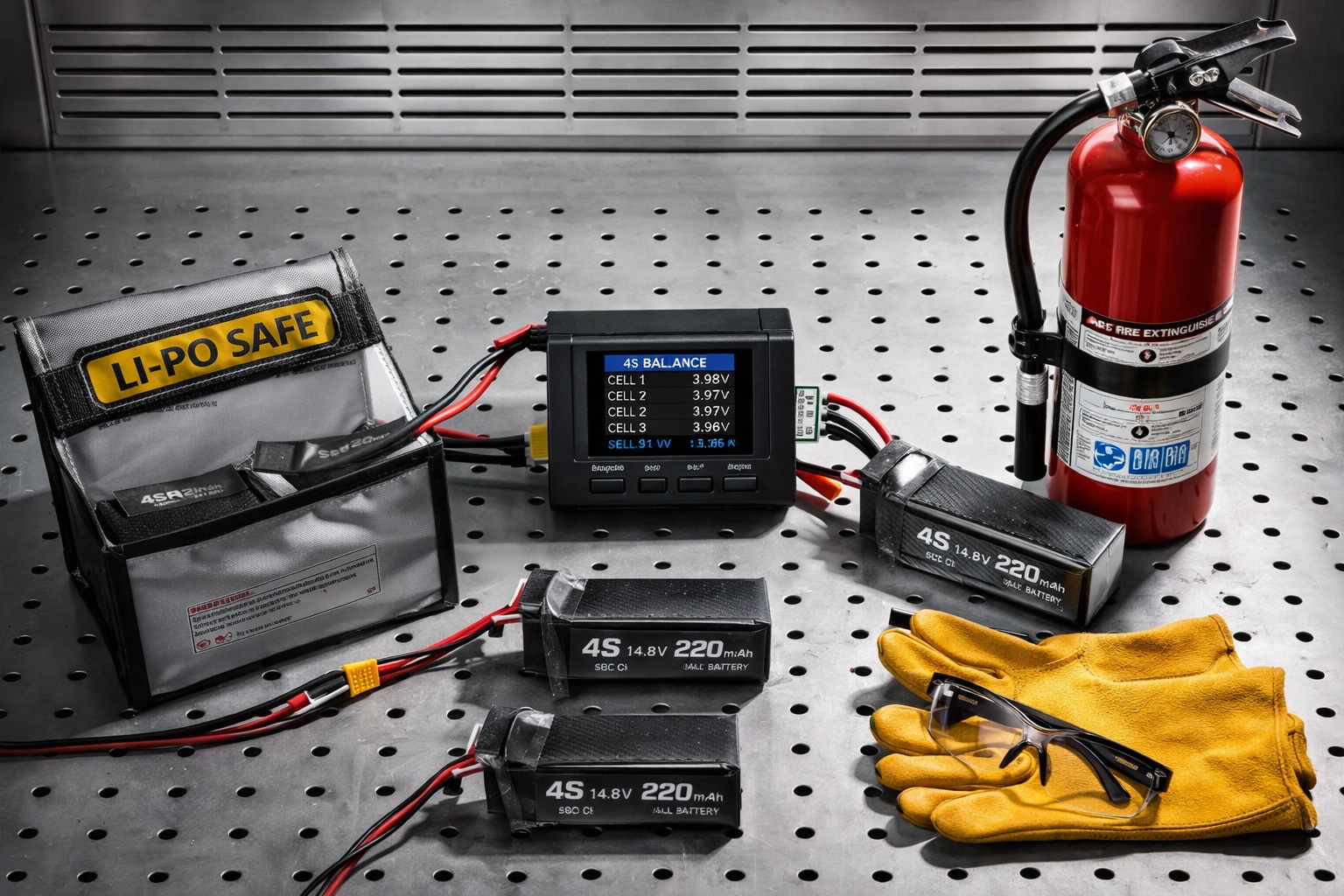
Proper lipo battery charging basics start with investing in quality equipment designed specifically for LiPo batteries. A dedicated LiPo charger with balance charging capabilities represents the most critical piece of equipment, as it monitors and equalizes the voltage of each individual cell during the charging process. Balance chargers connect to both the main discharge leads and the balance connector, allowing them to detect cell voltage imbalances and adjust charging accordingly. Popular charger brands like ISDT, SkyRC, and Turnigy offer models ranging from basic single-port units to advanced multi-chemistry chargers capable of handling various battery types simultaneously.
Beyond the charger itself, safety equipment forms an integral part of any responsible charging setup. A LiPo charging bag or metal ammo box provides containment in case of battery failure, while a smoke detector specifically designed for battery charging areas can provide early warning of problems. Fire extinguishers rated for electrical fires should be readily accessible, though water should never be used on LiPo fires as it can spread burning electrolyte. Many experienced pilots also use charging stations with built-in ventilation and temperature monitoring to create the safest possible charging environment.
Selecting the Right Charger for Your Needs
Choosing an appropriate charger depends on several factors including battery capacity, cell count, and charging frequency. For pilots with multiple batteries or those who fly frequently, a multi-port charger can significantly reduce charging time by handling several batteries simultaneously. The charger’s maximum current output should match your charging requirements – typically 1C (one times the battery capacity) for standard charging, though some pilots prefer slower 0.5C rates for maximum battery longevity. Higher-end chargers offer additional features like internal resistance testing, capacity verification, and data logging capabilities that help monitor battery health over time.
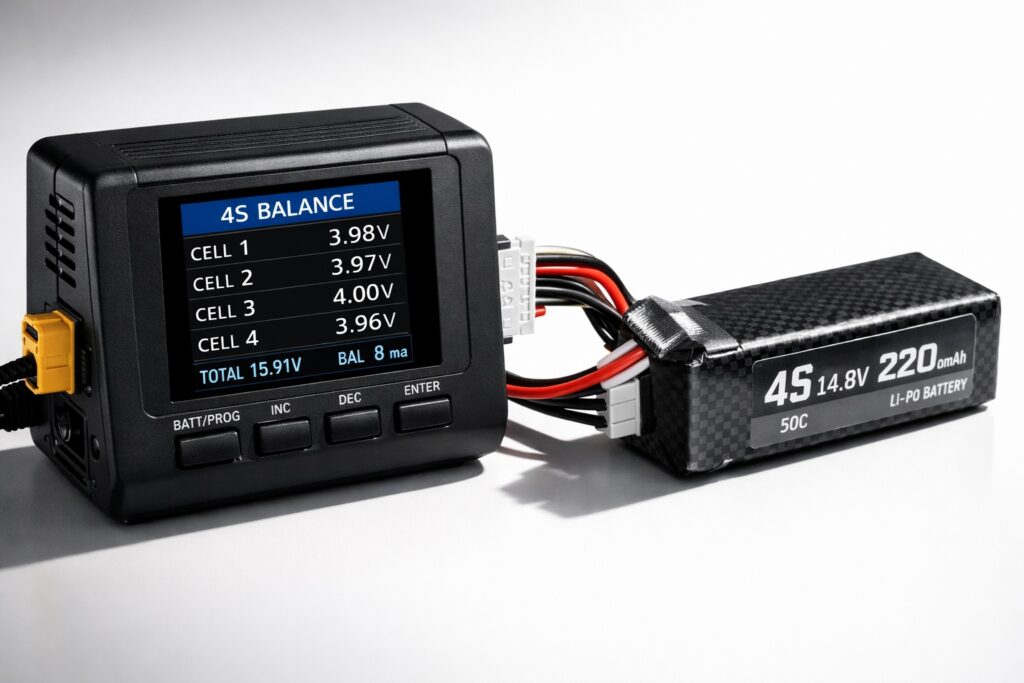
Essential LiPo battery charging equipment with balance charging capabilities
Safe LiPo Battery Charging Procedures
Implementing proper charging procedures represents the cornerstone of lipo battery charging basics and significantly reduces the risk of accidents or battery damage. Before connecting any battery to a charger, visually inspect the battery for signs of damage including swelling, punctures, damaged wires, or bent connectors. Any battery showing physical damage should be safely disposed of rather than charged, as damaged cells can fail catastrophically during the charging process. Check that the charger settings match your battery specifications exactly – incorrect cell count or capacity settings can lead to dangerous overcharging or undercharging conditions.
The charging environment plays a crucial role in safety, with temperature being a particularly important factor. LiPo batteries should only be charged at room temperature, typically between 32°F and 113°F (0°C to 45°C), as extreme temperatures can affect charging efficiency and safety. Never charge batteries immediately after use when they may still be warm from discharge, and avoid charging in direct sunlight or near heat sources. Always charge batteries on non-flammable surfaces away from combustible materials, and never leave charging batteries unattended for extended periods.
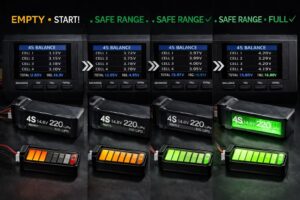
Step-by-step progression of LiPo battery charging cycle with safety checkpoints
Step-by-Step Charging Process
Begin the charging process by connecting the balance lead first, followed by the main power connector, as this sequence allows the charger to detect cell count and voltage before applying charging current. Set the charger to LiPo mode and verify that the cell count matches your battery – most chargers will display individual cell voltages once connected. Select an appropriate charging current, typically 1C for standard charging or lower rates for extended battery life. Monitor the charging process regularly, checking for unusual heat generation, swelling, or strange odors that might indicate problems. The charging process is complete when all cells reach 4.2V and the charger indicates completion, typically accompanied by an audible alert.
Common LiPo Charging Mistakes and How to Avoid Them
Many accidents and battery failures stem from common mistakes that can be easily avoided with proper knowledge of lipo battery charging basics. One of the most frequent errors involves charging batteries with incorrect settings, particularly mismatched cell counts or capacity values that can lead to dangerous overcharging. Always double-check charger settings before initiating charging, and consider using preset profiles for frequently charged battery types to reduce setup errors. Another common mistake involves charging damaged or aged batteries that should be retired from service – batteries showing signs of swelling, reduced capacity, or cell voltage imbalances should be safely disposed of rather than continued use.
Inadequate supervision during charging represents another significant risk factor, as problems can develop rapidly once they begin. While modern chargers include safety features like temperature monitoring and automatic shutoff, these systems are not foolproof and cannot replace human oversight. Environmental factors also contribute to charging problems – charging in extreme temperatures, humid conditions, or areas with poor ventilation can compromise safety and battery performance. Additionally, using inappropriate charging equipment such as automotive chargers or basic power supplies lacks the precision and safety features necessary for LiPo batteries.
Recognizing Warning Signs During Charging
Developing the ability to recognize warning signs during charging can prevent minor issues from becoming major safety hazards. Unusual heat generation beyond normal warmth indicates potential problems – batteries should remain only slightly warm during charging, and excessive heat suggests internal damage or charging system malfunction. Swelling or puffing of the battery case represents a serious warning sign that charging should be immediately stopped and the battery safely contained. Strange odors, particularly sweet or chemical smells, can indicate electrolyte leakage or thermal runaway beginning. Any sparking, smoke, or visible damage to connectors requires immediate disconnection and proper emergency procedures.
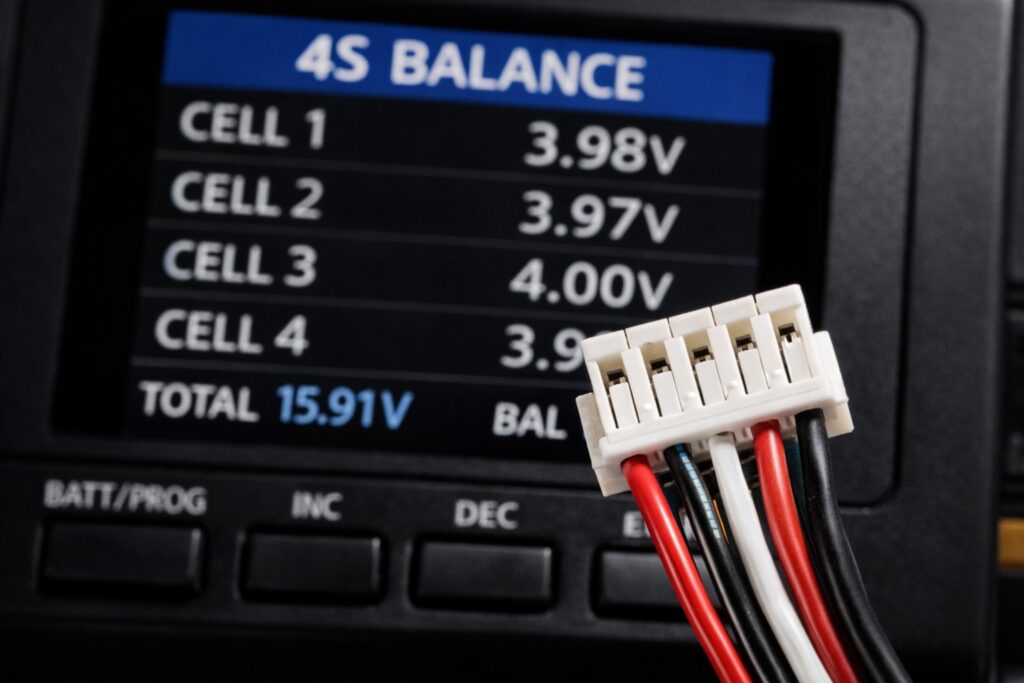
Balance charging monitors individual cell voltages for safe LiPo battery charging
Advanced LiPo Charging Techniques
Advanced practitioners of lipo battery charging basics often employ specialized techniques to maximize battery performance and longevity while maintaining safety standards. Storage charging represents one such technique, involving charging batteries to approximately 3.8V per cell (about 50-60% capacity) for long-term storage. This voltage level minimizes chemical degradation while preventing deep discharge damage, significantly extending battery lifespan when aircraft are stored for extended periods. Many chargers include dedicated storage modes that automatically achieve this optimal voltage level.
Capacity testing and internal resistance measurement provide valuable insights into battery health and performance characteristics. These tests, available on advanced chargers, help identify aging batteries before they become safety hazards and allow pilots to make informed decisions about battery retirement. Some pilots also employ parallel charging techniques for multiple batteries of identical specifications, though this requires careful attention to battery matching and specialized equipment to prevent current imbalances between batteries.
Maintaining Optimal Battery Health
Long-term battery health depends on consistent application of proper charging practices combined with appropriate storage and handling techniques. Avoiding deep discharges below 3.0V per cell prevents permanent capacity loss and extends overall battery life. Similarly, avoiding storage at full charge reduces chemical stress on the cells and maintains capacity over time. Regular capacity testing helps track battery degradation and identify when replacement becomes necessary, while maintaining detailed charging logs can reveal patterns that indicate developing problems before they become dangerous.
Frequently Asked Questions
What is the safest charging rate for LiPo batteries?
The safest charging rate for most LiPo batteries is 1C (one times the battery capacity in amps). For example, a 2200mAh battery should be charged at 2.2A maximum. Many pilots prefer slower rates like 0.5C for maximum battery longevity, while some high-performance batteries can safely handle higher rates up to 2C or 3C when specified by the manufacturer.
Can I leave LiPo batteries charging overnight?
No, LiPo batteries should never be left charging unattended for extended periods, especially overnight. While modern chargers have safety features, batteries can still fail catastrophically during charging. Always supervise the charging process and use a timer to remind yourself to check on charging batteries regularly.
What should I do if my LiPo battery starts swelling during charging?
If a LiPo battery begins swelling during charging, immediately disconnect it from the charger and place it in a fireproof container away from flammable materials. Do not attempt to use or charge the battery again. Swelling indicates internal damage or failure, and the battery should be safely disposed of at an appropriate recycling facility.
How do I know when my LiPo battery is fully charged?
A LiPo battery is fully charged when all cells reach 4.2V and the charger indicates completion, usually with an audible beep or visual indicator. The charging current will also drop to near zero as the battery approaches full charge. Never exceed 4.2V per cell, as this can cause dangerous overcharging.
What temperature is safe for charging LiPo batteries?
LiPo batteries should be charged at room temperature, ideally between 50°F and 80°F (10°C to 27°C). Avoid charging batteries that are hot from recent use, and never charge in extreme cold or heat. Temperature extremes can affect charging efficiency and safety, potentially leading to battery damage or failure.
Ready to Build Your Safe Charging Setup?
Proper LiPo charging equipment and techniques are essential for safe RC flying. Whether you’re selecting your first charger or upgrading your charging station, having the right guidance can save you time, money, and prevent dangerous situations. Contact our experts for personalized recommendations on chargers, safety equipment, and charging procedures tailored to your specific aircraft and flying style.