
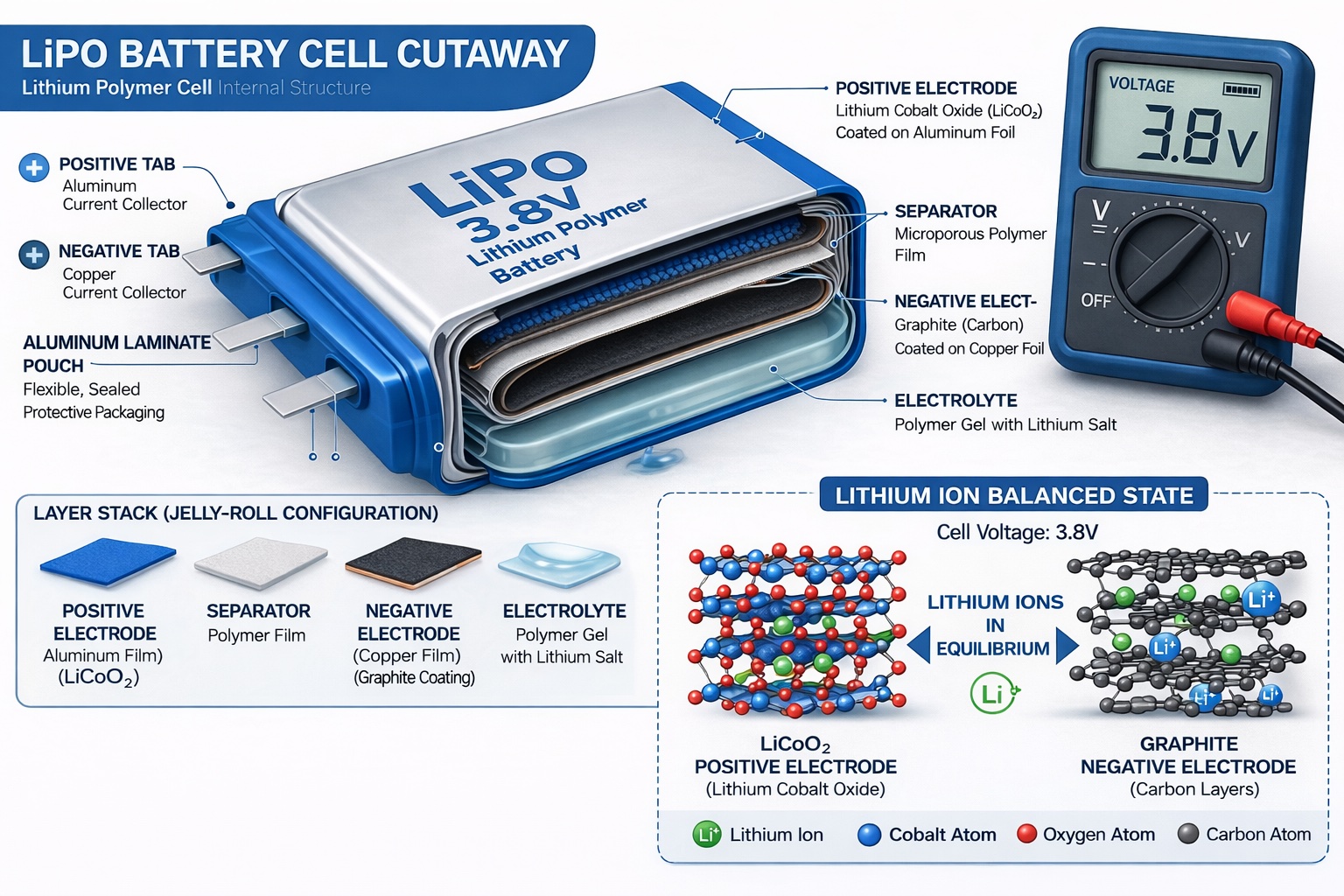
Understanding LiPo Storage Voltage Fundamentals
The optimal lipo storage voltage sits at 3.8 volts per cell, representing the sweet spot where lithium polymer batteries maintain their chemical stability during extended periods of inactivity. This voltage level, often called the nominal voltage, prevents the harmful effects of both overcharge and deep discharge that can permanently damage your battery cells. When batteries remain at full charge (4.2V per cell) or completely depleted (below 3.0V per cell) for extended periods, the internal chemistry begins to break down, leading to capacity loss, increased internal resistance, and potential safety hazards. Professional drone pilots, RC enthusiasts, and electronics manufacturers have adopted this 3.8V storage standard after extensive research into lithium polymer chemistry and long-term performance data.
Storage voltage differs significantly from operational voltages because it prioritizes longevity over immediate performance. During active use, LiPo batteries operate between 3.0V and 4.2V per cell, with peak performance occurring at higher voltage levels. However, maintaining these extreme voltages during storage creates stress on the battery’s internal structure, causing the electrolyte to break down and lithium ions to plate on the electrodes. The 3.8V storage voltage represents a balanced state where the battery maintains approximately 40-60% charge, providing enough energy to prevent deep discharge while avoiding the stress associated with high voltage storage. This careful balance extends battery life by years compared to improper storage practices, making it essential knowledge for anyone investing in quality lithium polymer batteries.
The Science Behind 3.8V Storage Voltage
Lithium polymer batteries achieve their optimal storage state at 3.8V per cell due to the electrochemical equilibrium that occurs at this voltage level. At this point, the lithium ions distribute evenly between the anode and cathode materials, minimizing the stress on the battery’s internal structure. Research conducted by battery manufacturers and independent testing laboratories consistently demonstrates that batteries stored at 3.8V per cell retain 80-90% of their original capacity after one year of storage, compared to only 60-70% capacity retention when stored at full charge. The molecular activity within the battery slows dramatically at this voltage, reducing the formation of solid electrolyte interface layers that can impede ion flow and increase internal resistance over time.
Proper LiPo Storage Voltage Procedures
Achieving the correct lipo storage voltage requires a systematic approach using appropriate charging equipment and monitoring tools. Most modern LiPo chargers include a dedicated storage mode that automatically adjusts each cell to 3.8V, making the process straightforward for users. Begin by connecting your battery to a quality balance charger capable of individual cell monitoring, then select the storage charge function. The charger will either charge or discharge each cell as needed to reach the target voltage, typically taking 15-30 minutes depending on the battery’s current state of charge. During this process, monitor the charger’s display to ensure all cells reach the target voltage within 0.05V of each other, indicating proper cell balance and healthy battery condition.
Temperature control plays a crucial role in the storage voltage process, as extreme temperatures can affect the accuracy of voltage readings and the effectiveness of the storage procedure. Perform storage charging in a room temperature environment between 60-80°F (15-27°C) for optimal results. Allow batteries that have been recently used to cool to room temperature before beginning the storage process, as warm batteries may show artificially high voltage readings. After reaching storage voltage, verify the readings with a digital multimeter or battery checker to confirm accuracy. Store the prepared batteries in a fireproof container or dedicated LiPo storage bag, maintaining the controlled temperature environment to preserve the carefully achieved voltage balance.
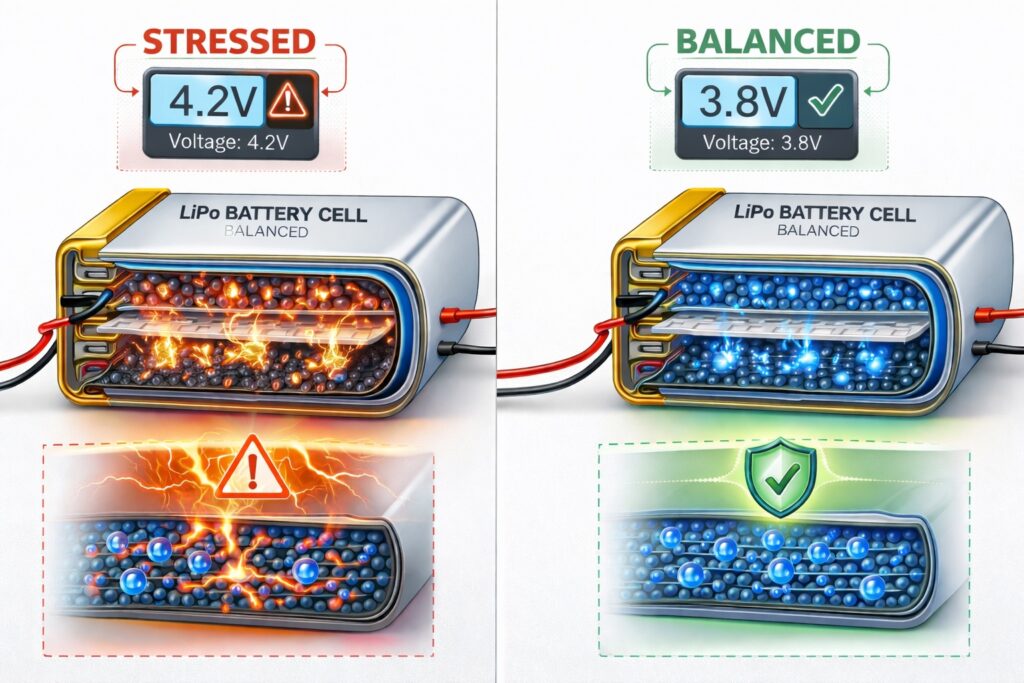
Cell structure comparison: high voltage stress vs optimal lipo storage voltage
Storage Charging Equipment and Tools
Professional-grade LiPo chargers with storage mode functionality represent the most reliable method for achieving proper storage voltage across all battery cells. Leading manufacturers like ISDT, SkyRC, and Hota produce chargers specifically designed for lithium polymer battery maintenance, featuring precise voltage control, individual cell balancing, and safety monitoring systems. These chargers typically include multiple charging profiles, allowing users to customize storage parameters based on specific battery types and manufacturer recommendations. Investment in quality charging equipment pays dividends through extended battery life and improved safety, as cheaper alternatives may lack the precision needed for proper voltage control and cell balancing during the storage process.
Long-Term Storage Considerations for LiPo Batteries
Extended storage periods require additional attention to maintain optimal lipo storage voltage and overall battery health. Batteries stored for more than three months should undergo periodic voltage checks every 30-60 days, as self-discharge can gradually reduce voltage below the ideal 3.8V level. Environmental factors such as temperature fluctuations, humidity, and electromagnetic interference can accelerate self-discharge rates, making regular monitoring essential for long-term storage success. Professional facilities often maintain detailed logs tracking voltage levels, storage dates, and environmental conditions to optimize their battery management protocols and identify potential issues before they become problematic.
The storage environment significantly impacts how well batteries maintain their target voltage over time. Ideal storage conditions include stable temperatures between 40-70°F (4-21°C), low humidity levels below 65%, and protection from direct sunlight or heat sources. Extreme temperatures can cause voltage drift and internal damage, while high humidity may lead to corrosion of battery terminals and connectors. Many serious hobbyists and professionals invest in climate-controlled storage solutions, such as dedicated battery refrigerators or environmentally controlled cabinets, to maintain consistent conditions year-round. These controlled environments can extend storage periods significantly, with some batteries maintaining proper voltage and capacity for over two years when stored under optimal conditions.
Monitoring and Maintenance During Storage
Regular voltage monitoring during extended storage periods prevents batteries from dropping below critical thresholds that could cause permanent damage or safety hazards. Establish a monthly checking schedule using a reliable voltage meter or battery analyzer to track each cell’s voltage and overall battery condition. Document these readings in a maintenance log, noting any cells that consistently discharge faster than others, as this may indicate internal damage or manufacturing defects. Batteries showing significant voltage imbalance or rapid self-discharge should be removed from storage and subjected to thorough testing before future use, as these symptoms often precede more serious failures.
Common LiPo Storage Voltage Mistakes and Solutions
One of the most frequent errors in LiPo battery storage involves storing batteries at full charge after use, particularly common among casual users who forget to discharge their batteries properly. This practice can reduce battery lifespan by 50% or more, as the high voltage stress accelerates chemical degradation within the cells. Similarly, storing completely discharged batteries creates equally damaging conditions, as deep discharge can cause copper dissolution and permanent capacity loss. The solution involves developing consistent post-use routines that include immediate storage charging, regardless of how recently the battery was used or how much charge remains.
Inadequate cell balancing during storage preparation represents another critical mistake that can lead to dangerous voltage imbalances over time. When individual cells within a battery pack drift apart in voltage, the weakest cell may become over-discharged while stronger cells maintain higher voltages, creating conditions for thermal runaway or fire. Proper storage procedures always include balance charging to ensure all cells reach 3.8V simultaneously, followed by periodic balance checks during extended storage periods. Users should never attempt to store batteries without proper balancing equipment, as the risks far outweigh any perceived convenience or cost savings from skipping this essential step.
Troubleshooting Storage Voltage Issues
When batteries fail to reach or maintain proper storage voltage, systematic troubleshooting can identify the root cause and determine whether the battery remains safe for continued use. Begin by checking charger calibration and connections, as loose balance leads or faulty charging equipment can prevent proper voltage achievement. Test individual cell voltages using a precision multimeter, looking for cells that consistently read higher or lower than the target 3.8V despite repeated storage charging attempts. Cells showing voltage differences greater than 0.1V from the target may indicate internal damage, electrolyte depletion, or manufacturing defects that compromise long-term storage stability and safety.
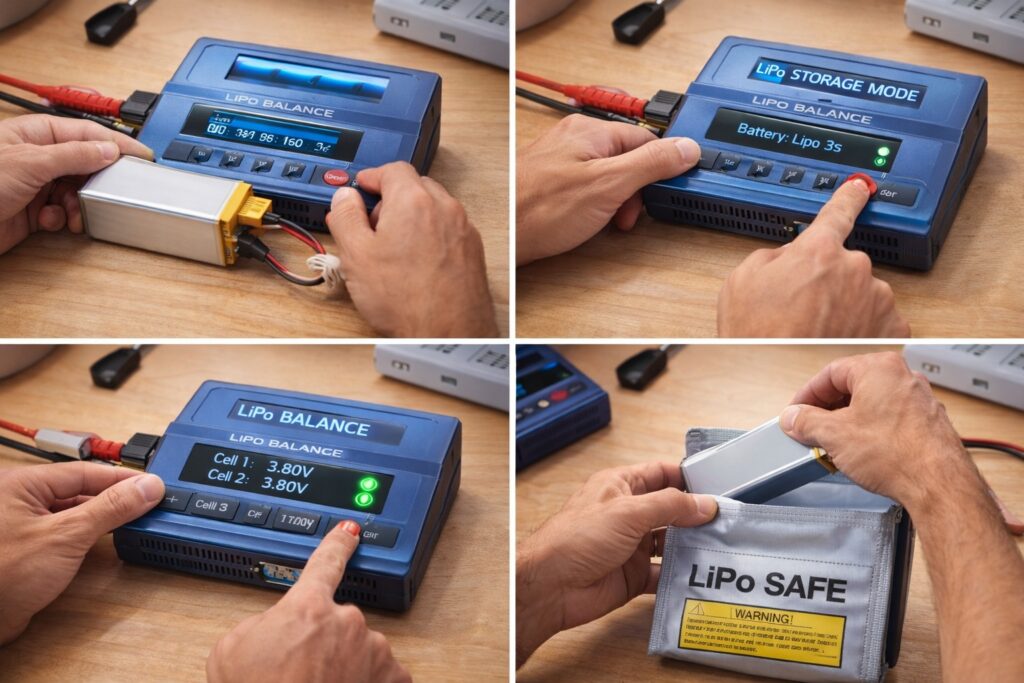
Proper procedure for achieving optimal lipo storage voltage using balance charger
Safety Protocols for LiPo Storage Voltage Management
Safety considerations during lipo storage voltage procedures extend beyond simple voltage targets to encompass fire prevention, toxic gas management, and emergency response protocols. Always perform storage charging in well-ventilated areas away from flammable materials, using fireproof charging bags or metal containers designed specifically for lithium polymer battery handling. Keep appropriate fire suppression materials nearby, including Class D fire extinguishers or sand, as water-based suppression methods can worsen lithium battery fires. Establish clear procedures for handling batteries that show signs of swelling, unusual heating, or off-gassing during storage preparation, including immediate isolation and professional disposal protocols.
Personal protective equipment becomes essential when working with damaged or questionable batteries during storage preparation. Safety glasses, heat-resistant gloves, and respiratory protection should be readily available whenever handling batteries that show signs of physical damage or chemical leakage. Create designated storage areas that isolate batteries from living spaces and valuable equipment, using metal containers with ventilation systems that can safely contain potential fires or toxic gas releases. Regular safety training and equipment maintenance ensure that storage procedures remain safe and effective over time, protecting both personnel and property from the inherent risks associated with lithium polymer battery technology.
Frequently Asked Questions
What voltage should I store my LiPo batteries at?
Store LiPo batteries at 3.8 volts per cell for optimal longevity and safety. This voltage represents the ideal balance between preventing deep discharge and avoiding high-voltage stress that can damage the battery’s internal chemistry during extended storage periods.
Does storage voltage affect LiPo lifespan?
Yes, proper storage voltage significantly extends LiPo battery lifespan. Batteries stored at 3.8V per cell retain 80-90% of their capacity after one year, compared to only 60-70% retention when stored at full charge or low voltage levels.
How long can you leave a LiPo at storage voltage?
LiPo batteries can safely remain at storage voltage for 6-12 months with minimal capacity loss. For longer storage periods, check voltage monthly and recharge to 3.8V as needed to prevent self-discharge below safe levels.
What happens if you store a LiPo fully charged?
Storing a LiPo at full charge (4.2V per cell) accelerates chemical degradation, reduces capacity, increases internal resistance, and can lead to swelling or safety hazards. This practice can cut battery lifespan in half compared to proper storage voltage maintenance.
Need Professional Battery Management Advice?
Proper LiPo storage voltage management requires expertise and the right equipment. Our battery specialists can help you develop comprehensive storage protocols, recommend appropriate charging equipment, and troubleshoot storage-related issues. Contact us today for personalized consultation on extending your battery investments and maintaining optimal performance through proper storage practices.