
Why Protecting Electronics Matters in FPV Flying
FPV drone electronics face constant threats from moisture, crashes, vibration, and electrical surges. Your flight controller, ESCs, and VTX represent hundreds of dollars in components that can fail instantly from water damage or impact. Unlike consumer drones with sealed housings, racing and freestyle quads expose electronics to harsh conditions. Rain, morning dew, grass moisture, and even humidity can penetrate circuit boards and cause corrosion or short circuits. Protecting electronics extends component lifespan, reduces repair costs, and prevents mid-flight failures that could result in flyaways or dangerous crashes.
Professional FPV pilots understand that electronic protection isn’t optional—it’s essential maintenance. A single crash in wet grass can destroy an unprotected flight controller worth $150 or more. Vibration from high-performance motors gradually loosens solder joints and component connections. Temperature fluctuations cause expansion and contraction that stresses circuit boards. Salt air near coastlines accelerates corrosion. Even indoor flying generates static electricity that can damage sensitive components. Implementing proper protection strategies transforms fragile electronics into resilient systems capable of withstanding the demanding environment of competitive FPV flying.
Conformal Coating: Your First Line of Defense
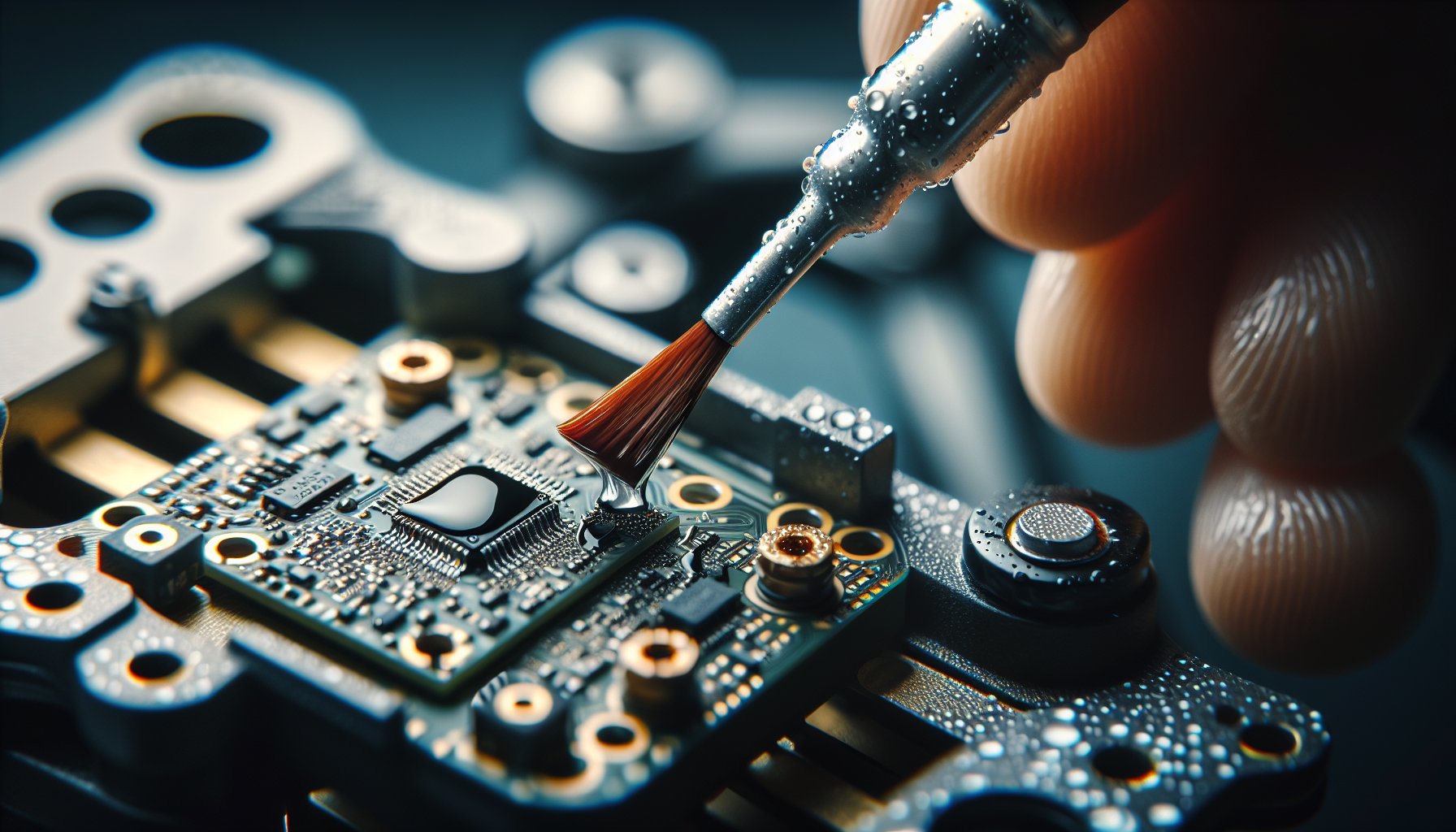
Conformal coating creates a protective barrier between your electronics and environmental hazards. This thin polymer layer bonds to circuit boards, components, and solder joints to prevent moisture penetration and reduce vibration damage. Acrylic coatings like MG Chemicals 419D offer excellent moisture resistance while remaining removable for repairs. Silicone-based coatings provide superior flexibility and temperature resistance but create permanent bonds. Urethane coatings deliver maximum durability for extreme conditions but require careful application techniques. Choose coating type based on your flying style, climate, and maintenance preferences.
Proper conformal coating application requires meticulous preparation and technique. Clean circuit boards with isopropyl alcohol to remove flux residue, oils, and contaminants. Mask connectors, switches, and adjustment points with Kapton tape or liquid masking solutions. Apply thin, even coats using brushes, spray bottles, or dipping methods. Multiple light coats perform better than single thick applications. Allow complete curing between coats—typically 24 hours at room temperature. Test coating integrity by checking for pinholes, bubbles, or thin spots under magnification. Quality conformal coating adds minimal weight while providing substantial protection against moisture, vibration, and chemical exposure.
Selecting the Right Conformal Coating Material
Acrylic conformal coatings excel for general FPV applications due to their balance of protection and reworkability. These coatings resist moisture and provide good dielectric properties while remaining soluble in specific solvents for component replacement. Silicone coatings offer superior flexibility and temperature resistance, making them ideal for high-vibration racing applications or extreme temperature environments. However, silicone coatings are difficult to remove and can interfere with adhesion of other materials. Urethane coatings provide maximum chemical and abrasion resistance for harsh environments but require proper ventilation during application due to toxic vapors during curing.
Waterproofing Strategies for Flight Controllers and ESCs
Waterproofing FPV electronics requires layered protection strategies that address different moisture entry points. Start with conformal coating as the base layer, then add physical barriers and drainage systems. Heat shrink tubing creates excellent waterproof seals around wire connections and component edges. Use marine-grade heat shrink with adhesive lining for permanent moisture barriers. Silicone sealant fills gaps around connectors and mounting holes, but avoid getting sealant on heat-sensitive components. Liquid electrical tape provides flexible waterproofing for irregular surfaces and wire bundles. Create drainage holes in frame bottom plates to prevent water accumulation around electronics.
Advanced waterproofing techniques involve complete component encapsulation or sealed housing systems. Potting compounds like polyurethane or silicone completely encapsulate electronics in waterproof material. This method provides maximum protection but makes repairs extremely difficult. Sealed enclosures with O-ring gaskets protect entire flight controller stacks while maintaining access for configuration changes. Use desiccant packets inside sealed enclosures to absorb residual moisture. Pressure equalization vents prevent vacuum formation during altitude changes while maintaining water resistance. Consider component placement during frame design—position sensitive electronics away from propwash zones and potential impact areas.
Emergency Water Damage Recovery Procedures
Quick response to water exposure can save expensive electronics from permanent damage. Immediately disconnect battery power to prevent short circuits and electrolytic corrosion. Remove components from the frame and disassemble stacks to access all surfaces. Rinse with distilled water to remove salt, dirt, or chemical contaminants that accelerate corrosion. Submerge components in isopropyl alcohol (99% concentration) to displace water and prevent corrosion. Gently brush circuit boards with soft brushes to remove deposits. Place components in sealed containers with desiccant packets or rice to absorb remaining moisture. Allow 48-72 hours drying time before attempting power-on tests.
Crash Protection and Vibration Dampening
Physical protection systems shield electronics from impact damage and vibration-induced failures. Soft-mount systems isolate flight controllers from frame vibrations using rubber grommets, silicone standoffs, or gel pads. These systems reduce high-frequency vibrations that cause gyroscope noise and accelerometer errors while protecting solder joints from stress fractures. Choose mounting materials based on vibration frequency and amplitude—soft materials for high-frequency isolation, firmer materials for low-frequency stability. Avoid over-dampening that introduces lag into control loops. Test vibration isolation effectiveness using blackbox logging and spectral analysis tools.
Impact protection requires strategic component placement and shock-absorbing materials. Position flight controllers and expensive components in protected areas of the frame, away from propellers and impact zones. Use foam padding or TPU bumpers around sensitive components. Design frames with crumple zones that absorb impact energy before reaching electronics. Carbon fiber provides excellent strength-to-weight ratios but transmits vibrations efficiently—consider hybrid construction with vibration-dampening materials. Distribute component weight to prevent concentrated stress points during crashes. Secure all components with appropriate fasteners—loose components become projectiles during impacts.
Advanced Vibration Analysis and Mitigation
Modern flight controllers provide vibration analysis tools through blackbox logging and spectral analysis features. Record flight data during typical flying conditions, then analyze frequency spectra to identify problematic vibration peaks. Propeller imbalance creates vibrations at motor rotation frequencies and harmonics. Bent motor shafts generate irregular vibration patterns. Frame resonance amplifies specific frequencies. Use this data to select appropriate soft-mounting solutions—different materials attenuate different frequency ranges. Silicone gels excel at high-frequency dampening, while rubber grommets handle mid-range vibrations. Combine materials for broadband vibration control.
Cable Management and Connection Protection
Proper cable management prevents wire fatigue, reduces electromagnetic interference, and protects connections from damage. Route cables away from propeller paths and sharp frame edges. Use cable ties or velcro straps every few centimeters to prevent wire movement during flight. Avoid tight bends that stress conductors—maintain minimum bend radii specified by cable manufacturers. Create service loops at connection points to accommodate frame flex and vibration. Separate power and signal cables to reduce electromagnetic interference. Shield sensitive signal cables with braided sleeves or twisted-pair construction.
Connection protection involves both mechanical and electrical safeguards. Solder all critical connections rather than relying on removable connectors in high-vibration environments. Apply heat shrink tubing over solder joints to prevent short circuits and provide strain relief. Use appropriate connector types for different applications—JST-PH for low-current signals, XT60 for high-current power connections. Apply dielectric grease to connector contacts in corrosive environments. Install ferrite beads on cable runs to suppress high-frequency noise. Consider redundant wiring for critical systems like receiver power and control signals.
Environmental Protection Strategies
Different flying environments require specific protection strategies tailored to local hazards. Coastal flying exposes electronics to salt spray that accelerates corrosion—increase conformal coating thickness and inspection frequency. Desert environments create dust infiltration problems—use positive pressure ventilation or sealed enclosures. Cold weather flying causes condensation when bringing equipment indoors—use gradual temperature transitions and moisture absorption systems. High-altitude flying reduces air density and cooling effectiveness—monitor component temperatures and adjust flight parameters accordingly.
Seasonal protection adjustments optimize electronic longevity throughout the year. Spring flying often involves high moisture conditions from melting snow and rain—emphasize waterproofing and drainage systems. Summer heat requires enhanced cooling and thermal protection—consider heat sinks and thermal interface materials. Fall brings temperature fluctuations and moisture from dew—monitor for condensation and thermal cycling stress. Winter flying involves extreme cold and potential ice formation—use cold-weather lubricants and pre-flight warming procedures. Document environmental conditions and component performance to identify patterns and optimize protection strategies.
Frequently Asked Questions
How do I waterproof my drone electronics?
Start with conformal coating on circuit boards, then add heat shrink tubing around connections and silicone sealant for gaps. Create drainage holes in the frame and consider potting compounds for complete waterproofing. Always disconnect power immediately if water exposure occurs.
What conformal coating should I use on a flight controller?
Acrylic coatings like MG Chemicals 419D offer the best balance of protection and reworkability for FPV applications. They resist moisture while remaining removable for repairs. Apply thin, even coats after thorough cleaning and proper masking of connectors.
Can vibration damage my flight controller?
Yes, vibration causes gyroscope noise, accelerometer errors, and solder joint fatigue. Use soft-mount systems with rubber grommets or silicone standoffs to isolate electronics from frame vibrations. Analyze blackbox data to identify problematic frequencies.
How do I protect electronics during crashes?
Position sensitive components in protected frame areas away from propellers and impact zones. Use foam padding or TPU bumpers around electronics. Design frames with crumple zones and secure all components with appropriate fasteners to prevent movement during impacts.
Need Expert FPV Electronics Protection?
Protecting your valuable FPV electronics requires the right techniques and materials. Our team specializes in custom protection solutions for racing and freestyle builds. Contact us for personalized consultation on waterproofing, vibration dampening, and crash protection strategies tailored to your flying style and environment.