
Why Your Racing Drone Frame Choice Matters More Than You Think
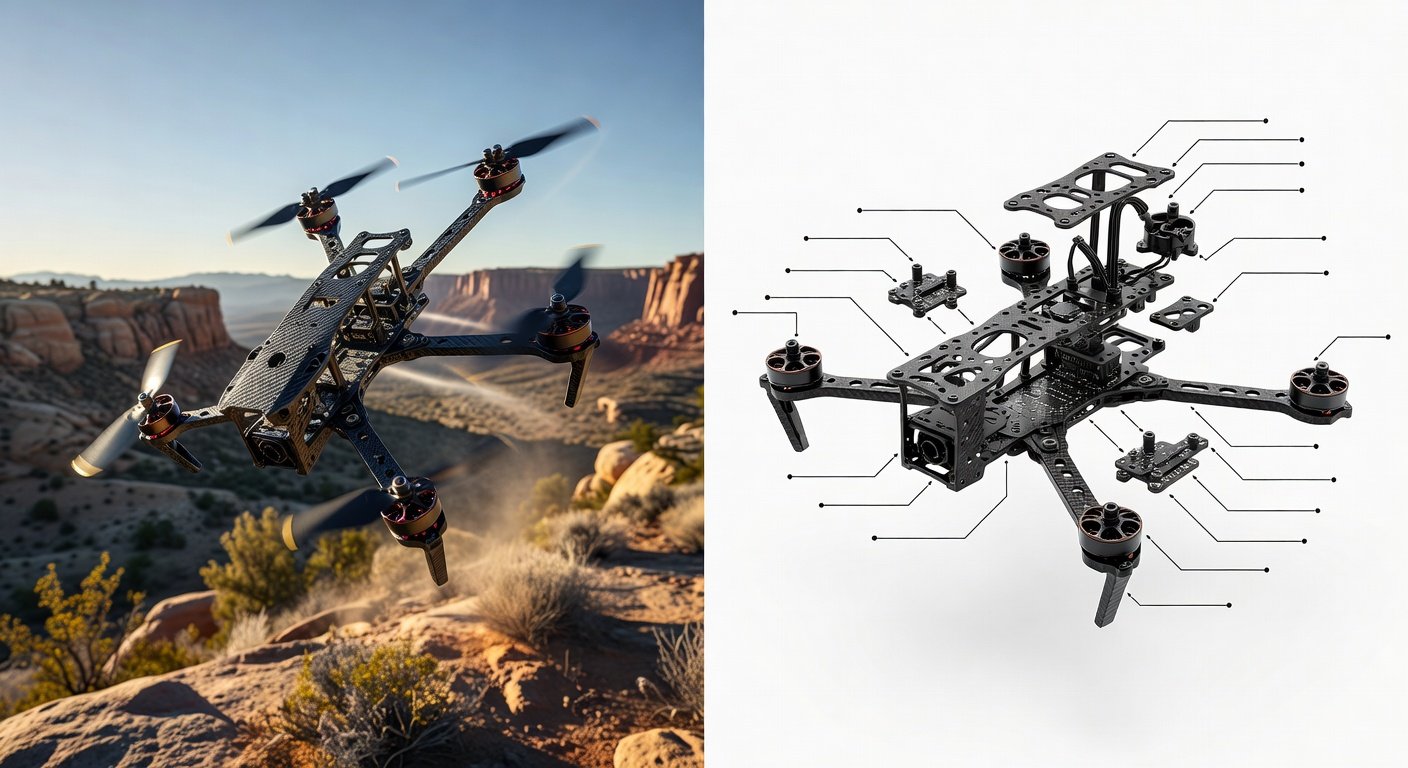
The racing drone frame serves as the backbone of your entire build, influencing everything from flight characteristics to crash durability. Unlike freestyle quads where pilots prioritize smooth flow and cinematic shots, racing demands frames optimized for aggressive maneuvers, tight gate threading, and split-second directional changes. Your frame selection directly impacts weight distribution, prop wash behavior, and how your quad responds to stick inputs during high-speed cornering. Professional racing pilots often maintain multiple frame setups for different track layouts, understanding that geometry changes can shave precious milliseconds off lap times.
Modern racing drone frames have evolved far beyond simple carbon fiber plates bolted together. Today’s designs incorporate sophisticated aerodynamic principles, strategic weight reduction techniques, and modular component layouts that allow for rapid repairs between race heats. The frame geometry determines your quad’s moment of inertia, affecting how quickly it can change direction and recover from aggressive maneuvers. Materials science advances have introduced new carbon fiber weaves, titanium hardware options, and hybrid construction methods that balance strength against weight penalties. Understanding these technical aspects helps pilots make informed decisions rather than following marketing hype or copying popular builds without considering their specific racing goals.
Racing Drone Frame Geometry: True-X vs Stretched-X Configurations
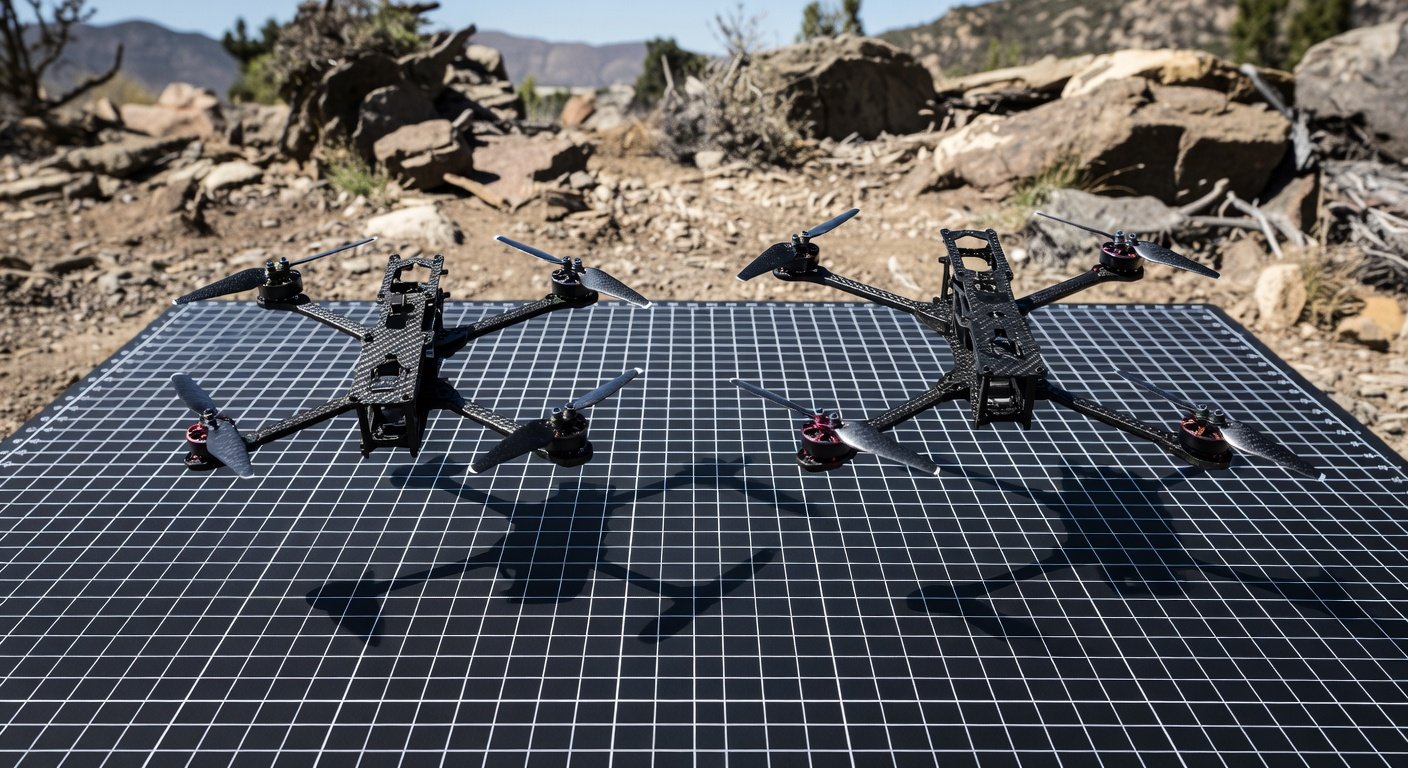
True-X geometry positions all four arms at equal 90-degree angles, creating a perfectly symmetrical platform that excels in technical racing scenarios. This configuration provides identical flight characteristics regardless of orientation, making it ideal for tracks with frequent direction changes and complex gate sequences. The balanced moment of inertia allows for precise control inputs and predictable responses during aggressive pitch and roll maneuvers. True-X frames typically measure between 180mm to 220mm motor-to-motor distance, with popular racing sizes clustering around 190mm to 210mm for optimal agility without sacrificing stability.
Stretched-X geometry extends the wheelbase by positioning rear arms slightly wider than front arms, creating an asymmetrical platform optimized for forward flight performance. This design reduces drag during high-speed straight sections while maintaining adequate control authority for cornering. The extended rear stance improves pitch stability at racing speeds, reducing oscillations that can cost valuable time on longer course sections. However, stretched-X frames require more sophisticated tuning to compensate for the asymmetrical mass distribution, and pilots must adapt their flying style to account for different pitch and roll response rates. Most stretched-X racing frames feature wheelbases ranging from 220mm to 250mm, with the additional length providing better prop clearance and improved aerodynamic efficiency during sustained forward flight.
Arm Thickness and Aerodynamic Considerations
Arm thickness directly impacts both structural integrity and aerodynamic performance, requiring careful balance between crash resistance and drag reduction. Thicker arms provide superior impact resistance and reduced vibration transmission to flight controllers, but create additional drag that becomes significant at racing speeds above 80mph. Most competitive racing frames utilize 4mm to 6mm arm thickness, with 5mm representing the sweet spot for most pilots. Thinner 3mm arms offer reduced weight and improved aerodynamics but require more frequent replacement after crashes. The arm cross-section shape also influences airflow, with teardrop profiles and beveled edges providing measurable drag reduction compared to simple rectangular sections.
Material Science: Carbon Fiber Grades and Construction Methods
Carbon fiber quality varies dramatically between budget and premium racing drone frames, with weave patterns, resin systems, and curing processes all affecting final performance characteristics. High-modulus carbon fiber offers superior stiffness-to-weight ratios but costs significantly more than standard modulus materials. The weave pattern influences strength distribution, with unidirectional carbon providing maximum strength along fiber orientation while woven patterns offer more balanced properties. Premium frames often utilize multiple carbon grades within a single design, placing high-modulus material in high-stress areas while using standard grades for less critical components.
Manufacturing processes significantly impact frame quality and consistency, with autoclave-cured frames offering superior resin distribution and void reduction compared to compression-molded alternatives. Hand-laid carbon allows for precise fiber orientation control but introduces variability between units, while automated processes ensure consistency at the cost of customization flexibility. Some manufacturers employ hybrid construction techniques, combining carbon fiber with aluminum inserts for hardware mounting points or titanium reinforcements in high-wear areas. Understanding these construction differences helps pilots evaluate whether premium pricing reflects genuine performance benefits or simply marketing positioning.
Alternative Materials: TPU, Aluminum, and Hybrid Designs
While carbon fiber dominates racing applications, alternative materials offer specific advantages for certain use cases and budget constraints. TPU (thermoplastic polyurethane) provides exceptional impact absorption and flexibility, making it popular for beginner racing frames where crash frequency remains high. Aluminum frames offer excellent thermal dissipation properties and precise machining tolerances but carry significant weight penalties that limit competitive applications. Hybrid designs combining carbon fiber main plates with TPU bumpers or aluminum hardware mounting points attempt to optimize multiple performance parameters simultaneously, though complexity increases manufacturing costs and potential failure points.
Stack Layout and Component Integration
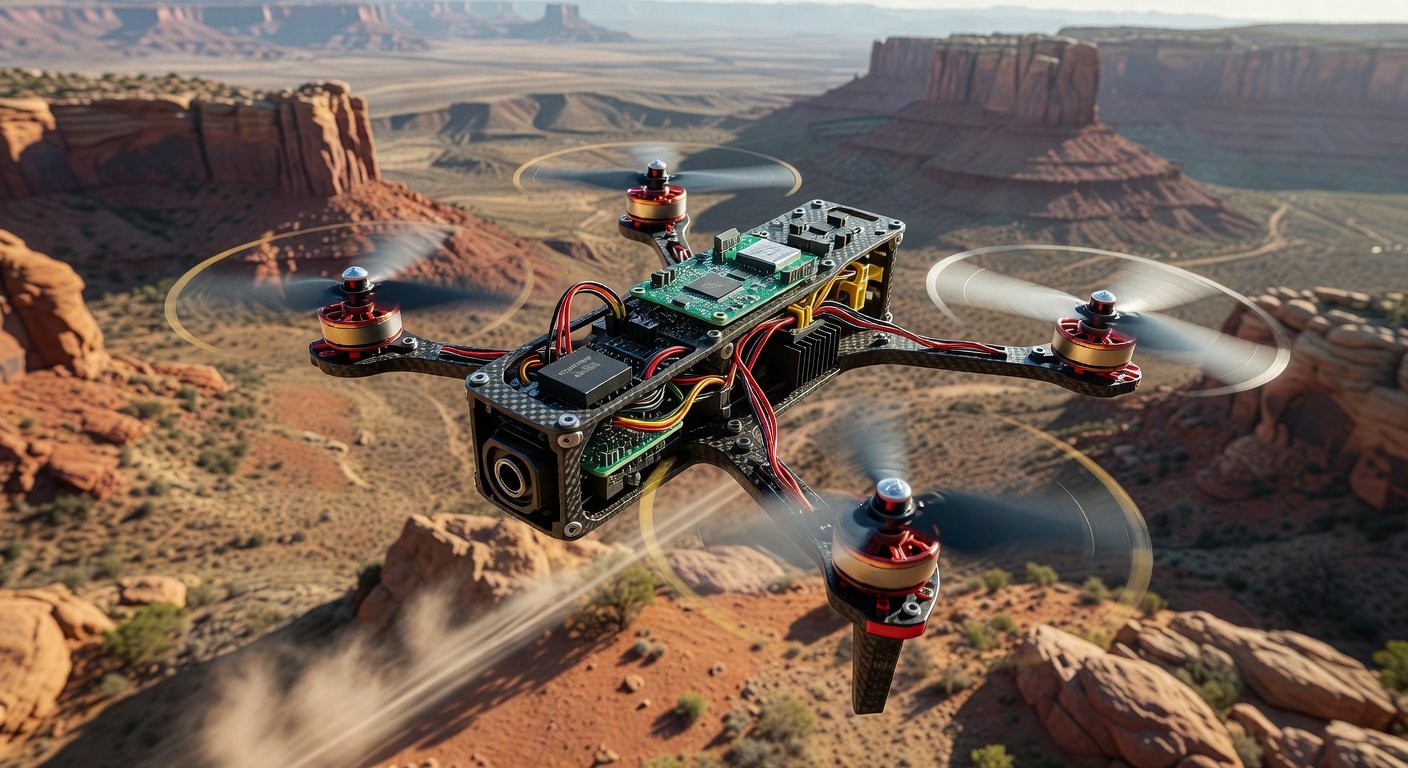
Modern racing drone frame designs prioritize efficient stack layouts that minimize wiring complexity while maximizing component accessibility for rapid maintenance. The traditional stack arrangement places the flight controller at the bottom, followed by the ESC, with optional additions like GPS modules or video transmitters occupying higher positions. However, racing applications often benefit from alternative arrangements that prioritize weight distribution and crash protection. Some frames position the flight controller in protected central locations while mounting ESCs on individual arms for improved heat dissipation and crash isolation.
Component spacing within the stack affects both electromagnetic interference and thermal management, with inadequate separation causing performance degradation or premature component failure. Racing frames typically provide 15mm to 20mm stack spacing, allowing sufficient clearance for standard components while maintaining compact overall dimensions. Wider spacing accommodates larger capacitors and heat sinks but increases overall height and raises the center of gravity. The frame’s mounting hole patterns must align with standard 20x20mm, 25.5×25.5mm, or 30.5×30.5mm component footprints, with some premium frames offering multiple mounting options for maximum flexibility.
Unibody vs Standoff Construction Methods
Unibody racing drone frame construction integrates the entire chassis into a single molded unit, eliminating potential failure points while reducing overall weight and part count. This approach provides maximum structural rigidity and simplified assembly but complicates repairs since damage to any section requires complete frame replacement. Unibody designs excel in professional racing environments where performance takes priority over maintenance convenience. The integrated construction allows for complex internal geometries and optimized material distribution that would be impossible with traditional bolt-together assemblies.
Top Racing Drone Frame Recommendations by Budget
Budget-conscious pilots seeking reliable performance should consider the ImpulseRC Apex or TBS Source One frames, both offering proven designs under $50 that can compete effectively in local racing events. These frames provide solid construction quality, adequate spare parts availability, and straightforward assembly procedures that minimize build complexity for newer pilots. The Apex features a true-X configuration optimized for technical courses, while the Source One offers a slightly stretched geometry that benefits high-speed sections. Both frames include comprehensive hardware kits and clear assembly instructions that reduce the learning curve for first-time builders.
Mid-range options between $75-150 include the Armattan Chameleon Ti and ImpulseRC Helix, representing significant upgrades in materials and construction quality. The Chameleon Ti incorporates titanium hardware and premium carbon fiber with lifetime crash replacement warranties that appeal to aggressive pilots. The Helix features advanced aerodynamic shaping and modular arm designs that allow for easy repairs and geometry adjustments. Premium frames above $200, such as the Catalyst Machineworks Switchback or custom offerings from smaller manufacturers, provide cutting-edge materials and construction techniques that offer measurable performance advantages for serious competitors willing to invest in marginal gains.
Professional Racing Frame Features
Professional-grade racing drone frames incorporate specialized features that provide competitive advantages in high-level racing environments. These include precisely calculated weight distribution, aerodynamic optimization through computational fluid dynamics analysis, and modular designs that allow rapid configuration changes between race heats. Professional frames often feature proprietary mounting systems, integrated vibration damping, and materials specifications that exceed recreational requirements. Understanding these advanced features helps serious racers evaluate whether premium pricing translates into measurable performance improvements or simply represents marketing differentiation in a crowded marketplace.
Frequently Asked Questions
What’s the difference between true-X and stretched-X racing drone frame geometry?
True-X frames have equal 90-degree arm spacing for balanced handling and technical course performance. Stretched-X frames extend the rear arms for improved straight-line stability and reduced drag at high speeds, but require different tuning approaches.
How thick should racing drone frame arms be?
Most racing frames use 4-6mm arm thickness, with 5mm being the optimal balance of crash resistance and aerodynamic efficiency. Thinner arms reduce drag but break more easily, while thicker arms add weight and drag.
Is carbon fiber always the best material for racing drone frames?
Carbon fiber offers the best strength-to-weight ratio for competitive racing. However, TPU frames work well for beginners due to crash resistance, and aluminum provides excellent heat dissipation but with weight penalties.
What stack spacing should I look for in a racing frame?
Racing frames typically use 15-20mm stack spacing to accommodate standard components while maintaining compact dimensions. Adequate spacing prevents electromagnetic interference and allows proper heat dissipation between components.
Are unibody or standoff frame designs better for racing?
Unibody frames offer maximum rigidity and weight savings for competitive racing but require complete replacement when damaged. Standoff designs allow easier repairs and component access but add weight and potential failure points.
Ready to Build Your Ultimate Racing Machine?
Choosing the right racing drone frame sets the foundation for competitive success, but optimizing the complete build requires expertise in component selection, tuning, and setup. Our FPV specialists can help you select the perfect frame geometry and materials for your racing goals, ensuring every component works together for maximum performance. Contact us today to discuss your racing ambitions and get personalized recommendations that will give you the competitive edge you need.