
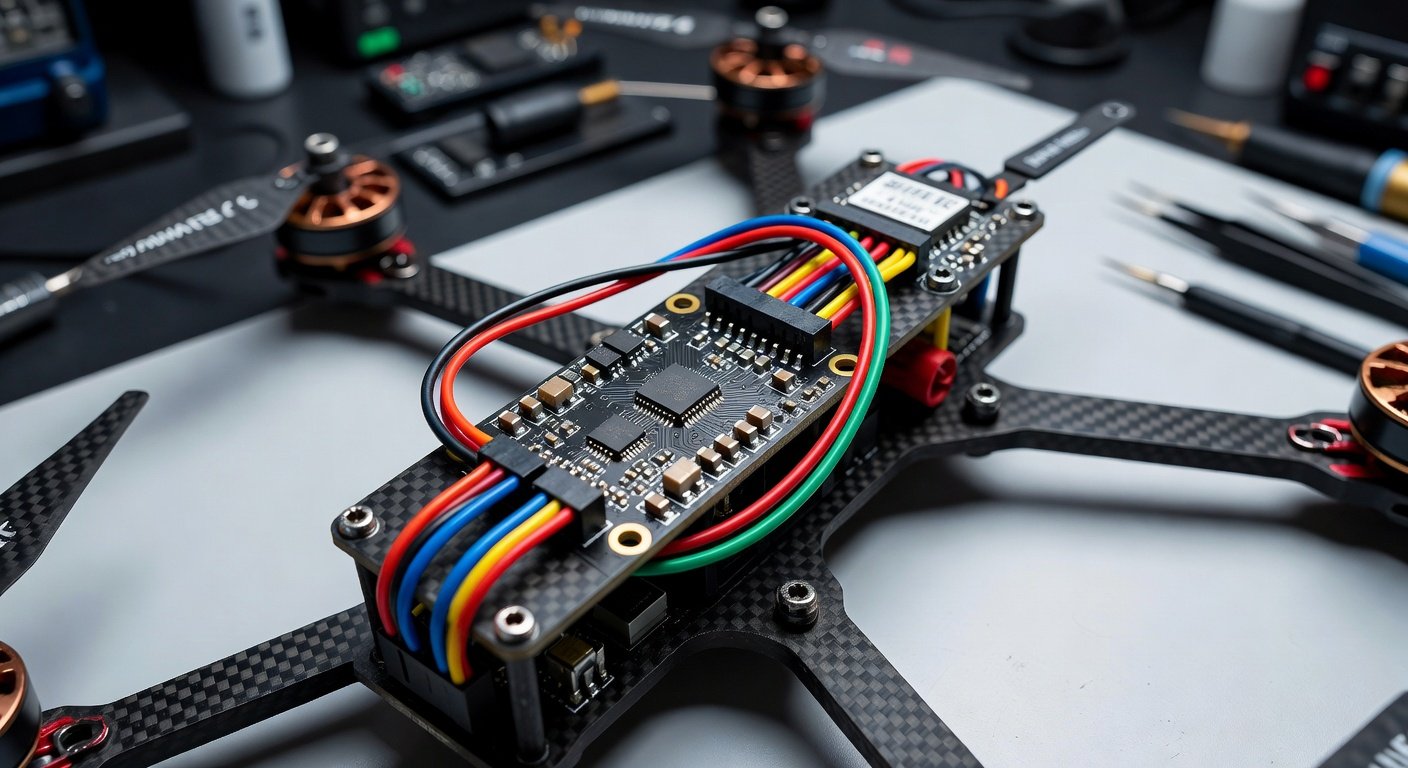
Tattu 30A BLHeli_S ESC Overview and First Impressions
The Tattu 30A BLHeli_S ESC has carved out a solid reputation in the FPV community as a budget-friendly option that doesn’t compromise on essential features. This electronic speed controller supports 2-6S LiPo configurations and comes equipped with the popular BLHeli_S firmware, making it compatible with a wide range of motors and flight controllers. The compact 36x18mm form factor fits comfortably on most 5-inch racing and freestyle frames, while the 5.5-gram weight keeps your build light and agile. Tattu has positioned this ESC as an entry-level option for pilots who want reliable performance without breaking the bank, targeting both newcomers building their first quad and experienced pilots looking for dependable backup components.
Right out of the package, the Tattu 30A impresses with its clean construction and thoughtful design choices. The PCB features a matte black solder mask that looks professional and helps hide minor scuffs during installation. All components appear well-seated with consistent solder joints throughout, suggesting decent quality control standards. The silicone wire gauge feels appropriate for the 30-amp rating, though some builders might prefer slightly thicker leads for peace of mind during high-current draws. The included heat shrink tubing provides adequate protection, though experienced builders often replace it with their preferred brand for consistency across the build. The overall presentation suggests Tattu has focused on delivering value rather than premium aesthetics.
BLHeli_S Firmware Features and Configuration Options
The BLHeli_S firmware implementation on the Tattu 30A provides access to all the standard configuration options that FPV pilots have come to expect. Motor timing adjustments, startup power settings, and PWM frequency selections are all available through BLHeliSuite or your preferred configurator software. The ESC ships with conservative default settings that work well for most motor combinations, but the ability to fine-tune parameters allows experienced builders to optimize performance for specific applications. Demag compensation works effectively to maintain smooth motor operation, while the temperature protection features help prevent thermal damage during aggressive flying sessions. The firmware responds well to configuration changes and maintains settings reliably across power cycles.
One notable advantage of the BLHeli_S implementation is the smooth motor startup behavior and consistent throttle response across the entire range. The ESC handles rapid throttle transitions without hesitation, making it suitable for both racing applications where quick spool-up matters and freestyle flying where smooth control is paramount. Motor synchronization remains stable even during rapid direction changes and aggressive maneuvers. The regenerative braking feature works as expected, though some pilots prefer to disable it for specific flying styles. Overall, the firmware performance matches what you’d expect from other BLHeli_S implementations, with no obvious limitations or quirks that would impact normal FPV operations.

Compatibility with Popular Motor and Frame Combinations
Testing the Tattu 30A with various motor combinations reveals solid compatibility across different brands and specifications. The ESC handles 2207 motors on 5S configurations without thermal issues during typical flying sessions, though extended hover tests do generate noticeable heat buildup. With 2306 motors on 4S setups, performance remains excellent with minimal temperature concerns even during aggressive freestyle sessions. The mounting hole spacing aligns perfectly with standard 30.5×30.5mm flight controller stacks, and the low profile design clears most frame arms without interference. Cable management proves straightforward thanks to the flexible silicone leads, though some builders report preferring slightly longer wires for certain frame configurations. The overall package integrates well into both racing and freestyle builds without requiring special accommodations.
Real-World Performance Testing and Flight Characteristics
Extended flight testing reveals the Tattu 30A’s strengths and limitations across different flying scenarios. During racing sessions with aggressive throttle inputs and rapid direction changes, the ESC maintains consistent performance without noticeable lag or hesitation. Motor temperatures remain reasonable during typical 3-4 minute racing runs, though the ESCs themselves generate moderate heat that benefits from adequate airflow. The smooth throttle response translates to predictable quad behavior, making it easier to hit precise racing lines and maintain consistent lap times. Regenerative braking provides effective motor stopping power when enabled, though some racing pilots prefer the feel with this feature disabled for more linear throttle control.
Freestyle flying presents different challenges, and the Tattu 30A adapts well to the varied demands of creative flying. During power loops and aggressive maneuvers, the ESC delivers smooth power transitions that help maintain flow and control. The thermal performance proves adequate for most freestyle sessions, though extended hover tests and repeated high-power maneuvers can push temperatures toward the upper limits. Battery efficiency appears competitive with other ESCs in this price range, with no obvious power waste or excessive current draw during normal operations. The overall flight experience feels natural and responsive, without the quirks or limitations that sometimes plague budget ESC options.

Thermal Management and Durability Considerations
Heat dissipation represents a critical factor for any ESC, and the Tattu 30A performs reasonably well in this area despite its compact size. The PCB design includes adequate copper pour for heat spreading, though the small form factor inherently limits thermal mass. During bench testing with continuous high-current loads, the ESC reaches concerning temperatures faster than larger alternatives, but typical flight patterns provide sufficient cooling breaks to prevent thermal shutdown. The temperature protection circuitry appears to function correctly, gradually reducing power output as temperatures climb rather than abruptly cutting power. Most pilots report satisfactory thermal performance during normal flying, though those planning extended hover work or particularly aggressive flying styles might consider additional cooling solutions.
Value Proposition and Competitive Analysis
At its current market price point, the Tattu 30A BLHeli_S ESC competes directly with several other budget-oriented options from manufacturers like Racerstar, Emax, and various generic brands. The build quality appears superior to the cheapest alternatives while remaining significantly less expensive than premium options from manufacturers like T-Motor or Hobbywing. The inclusion of genuine BLHeli_S firmware rather than a clone implementation adds value for pilots who prioritize software compatibility and update support. The performance characteristics match or exceed what most pilots would expect from an ESC in this price category, making it a reasonable choice for budget-conscious builds that still demand reliable operation.
Compared to stepping up to more expensive ESCs, the Tattu 30A delivers perhaps 80% of the performance at roughly 50% of the cost. The primary compromises involve thermal capacity and premium features like telemetry support or advanced filtering options. For many FPV applications, these limitations prove acceptable given the significant cost savings. The ESC works particularly well for pilots building their first racing or freestyle quad, where budget constraints often dictate component choices but reliable performance remains essential. Experienced pilots might appreciate having these ESCs as affordable spares or for experimental builds where premium components aren’t justified.
Frequently Asked Questions
What motor sizes work best with the Tattu 30A BLHeli_S ESC?
The Tattu 30A works well with 2207 motors on 4S-5S and 2306 motors on 4S configurations. While it can handle larger motors, thermal limitations may become apparent during extended high-power operations.
Does the Tattu 30A ESC support telemetry feedback?
No, this ESC does not include telemetry capabilities. It focuses on basic speed control functions with BLHeli_S firmware support for configuration and tuning.
How does the Tattu 30A compare to other budget ESC options?
The Tattu 30A offers better build quality than generic alternatives while maintaining competitive pricing. The genuine BLHeli_S firmware and consistent performance make it a solid value choice.
What’s the maximum voltage rating for the Tattu 30A ESC?
The ESC supports 2-6S LiPo configurations, making it suitable for most FPV applications from lightweight builds to high-performance racing setups.
Need Help Choosing the Right ESC for Your Build?
Selecting the perfect ESC involves balancing performance requirements, thermal considerations, and budget constraints. Our FPV experts can help you evaluate your specific needs and recommend components that deliver the best value for your flying style and build goals.