
The Drop-Off: What’s Flying & Where
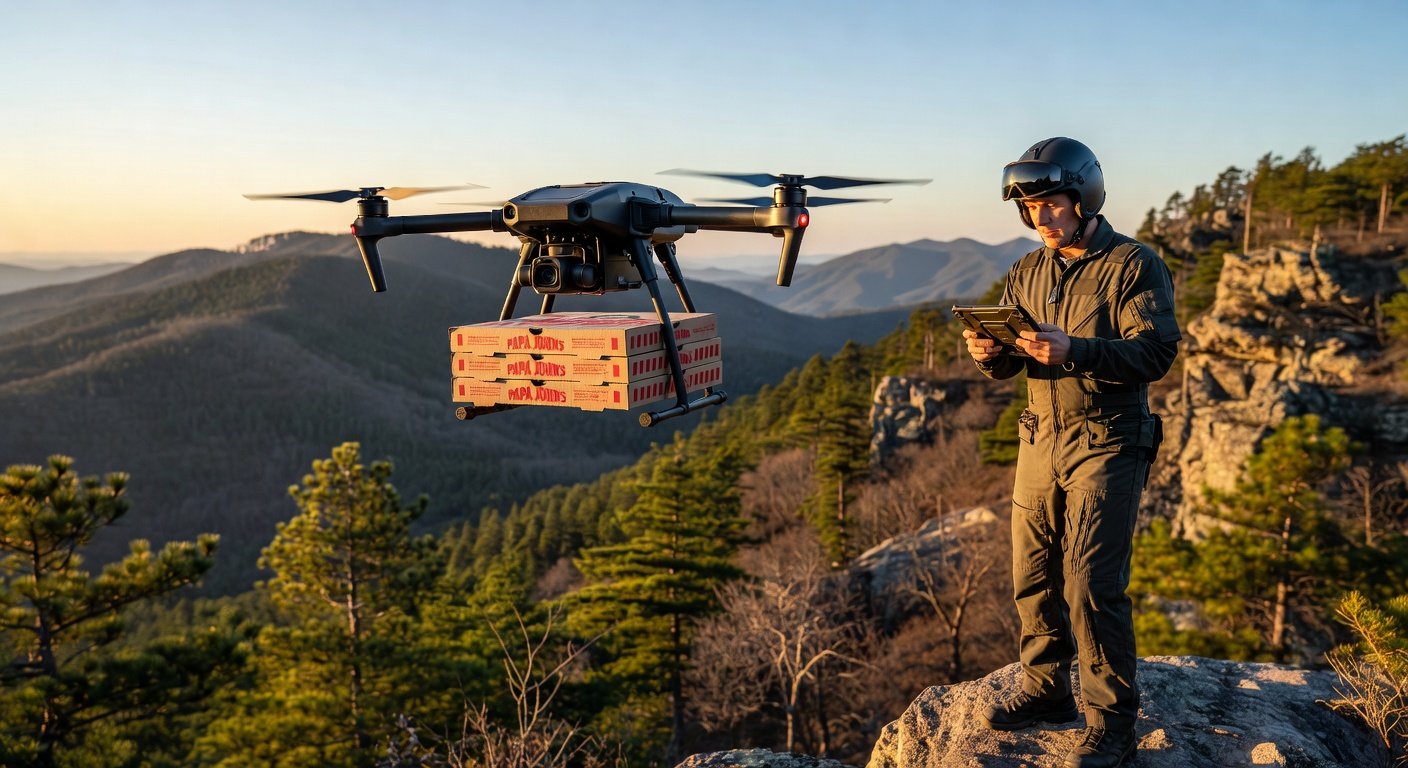
Papa Johns just jumped into the drone delivery game, kicking off a pilot program with Wing in Indian Trail, North Carolina, on May 11. Forget about pizza for now; this initial rollout is strictly for their new Oven Toasted Sandwiches. Customers living near Sun Valley Commons, an area already serviced by an established Wing operations hub, can place orders through the Wing app and have their grub flown straight to their doorstep. It’s a localized test to gauge feasibility, building on Wing’s existing infrastructure that’s been running DoorDash deliveries in the Charlotte suburbs for over a year. This isn’t just a marketing stunt; it’s a real-world test of a tightly integrated logistics chain, focusing on specific menu items designed to fit the drone’s capabilities.
So, what’s actually flying? Wing uses a hybrid VTOL (Vertical Take-Off and Landing) aircraft, designed for efficiency. This bad boy boasts a 12-mile round-trip range and cruises at around 65 mph, making those quick hops viable. Crucially, the standard drone handles a 2.5-pound payload, which is exactly why those Oven Toasted Sandwiches are on the menu and large pizzas aren’t – a perfect fit for a single meal. For heavier lift, Wing also has a larger drone capable of carrying up to 5 pounds. The delivery itself is slick: packages are lowered from about 23 feet via a retractable tether, so the drone never actually lands at your house, minimizing noise and disturbance.
The Strategy & The Tech Behind It
This sandwich-first strategy isn’t random; it’s a smart play to showcase Papa Johns’ new Oven Toasted Sandwiches, which they introduced in early April. Three specific sandwiches are on the drone menu: the Philly Cheesesteak, the Chicken Bacon Ranch, and the Steak and Mushroom. Right now, ordering is handled exclusively through the Wing app. However, the long-term vision articulated by Papa Johns’ Chief Digital and Technology Officer, Kevin Vasconi, is much more integrated. They plan to weave the drone network directly into the Papa Johns first-party app and eventually into Lou AI, their Google Cloud-powered digital ordering assistant. This push towards ‘agentic ordering’ aims for a seamless, human-free delivery loop from order to doorstep.
While Little Caesars beat Papa Johns to the punch with heavy-payload pizza delivery via Flytrex, Wing’s approach here is different and notable. The Little Caesars pilot focused on large family orders, pushing payload limits. This Papa Johns collaboration marks Wing’s first direct partnership with a national restaurant brand, distinct from their existing multi-restaurant DoorDash operations. It signifies a deeper integration beyond a third-party platform. Furthermore, the Charlotte metro area is rapidly solidifying its position as the premier drone delivery testbed in the US. With Wing and DoorDash already reaching over 60,000 households and Atrium Health planning medical deliveries with Zipline by 2027, North Carolina’s forward-thinking regulatory environment and suburban sprawl make it ideal.
FPV Community’s Take & The Bigger Picture
Let’s be real, many of us in the FPV community have seen these ‘marketing pilots dressed as logistics breakthroughs’ before. The graveyard of ambitious drone delivery announcements is packed: Domino’s in New Zealand back in 2016, and recent unscaled partnerships like Jet’s Pizza and Pagliacci with Zipline. So, skepticism is warranted. But what’s genuinely different now, particularly with Wing, is the underlying infrastructure. They’ve got FAA approval for beyond-visual-line-of-sight (BVLOS) operations, a fully established ‘nest’ network in the Charlotte suburbs, and an efficient pilot-to-aircraft ratio. The hardware and regulatory hurdles are largely cleared. The tech isn’t the problem; scaling past a single franchise and small subdivision is the real challenge.
For FPV enthusiasts and builders, this pilot reveals the cutting edge of drone logistics, even if it’s not custom racing quads. The true strategic play here extends beyond sandwiches. It’s about Alphabet, Wing’s parent company, potentially capturing both the AI-powered ordering layer and the autonomous delivery layer for a major national chain. That’s the real value proposition, with the sandwiches merely serving as a demo. For drone delivery to move from these controlled pilots to widespread production in the restaurant sector, the key constraints are no longer just airspace or drone hardware. It boils down to consistent order volume, the weight-per-delivery economics, and whether this model can truly undercut or add sufficient value over a standard $7 DoorDash fee plus tip. The FPV community watches closely to see if novelty translates into sustainable demand, or if traditional services still win on price and convenience.
Quick Facts
- •💡 Papa Johns launched a drone delivery pilot with Wing in Indian Trail, NC on May 11, delivering Oven Toasted Sandwiches.
- •💡 Wing’s standard drone is a hybrid VTOL with a 12-mile round-trip range, 65 mph cruise speed, and a 2.5-pound payload limit.
- •💡 Packages are lowered from approximately 23 feet via a retractable tether, with the drone never landing at the customer’s location.
- •💡 This marks Wing’s first direct partnership with a national restaurant brand, differentiating it from previous third-party platform collaborations.
- •💡 The long-term strategy involves integrating Wing’s delivery network directly into the Papa Johns app and Lou AI, aiming for an ‘agentic ordering’ system.