

What Is ExpressLRS (ELRS)?
ExpressLRS, commonly abbreviated as ELRS, is an open-source radio control protocol designed specifically for FPV racing and freestyle flying. Unlike traditional 2.4GHz systems that rely on proprietary firmware and closed ecosystems, ExpressLRS operates on a transparent, community-driven platform that prioritizes low latency, reliability, and affordability. The protocol was created to address the limitations of existing radio systems, offering pilots a modern alternative that doesn’t lock them into expensive manufacturer ecosystems. ELRS transmitters and receivers communicate using a custom protocol built on top of standard radio hardware, meaning you can use compatible equipment from multiple manufacturers without compatibility headaches.
At its core, ExpressLRS solves a critical problem in FPV flying: latency. The time delay between moving your transmitter stick and seeing that input reflected on your quadcopter’s response directly impacts your ability to fly aggressively and precisely. Traditional systems introduce 50-100ms of latency, while ExpressLRS achieves 50-150ms depending on your configuration and link rate. This responsiveness makes a tangible difference during high-speed racing gates, technical freestyle lines, and emergency recovery maneuvers. The protocol also prioritizes packet loss resilience, meaning your quad maintains control authority even when signal quality degrades, a critical safety feature for outdoor flying where interference and distance challenges are inevitable.
Key Features That Make ExpressLRS Stand Out
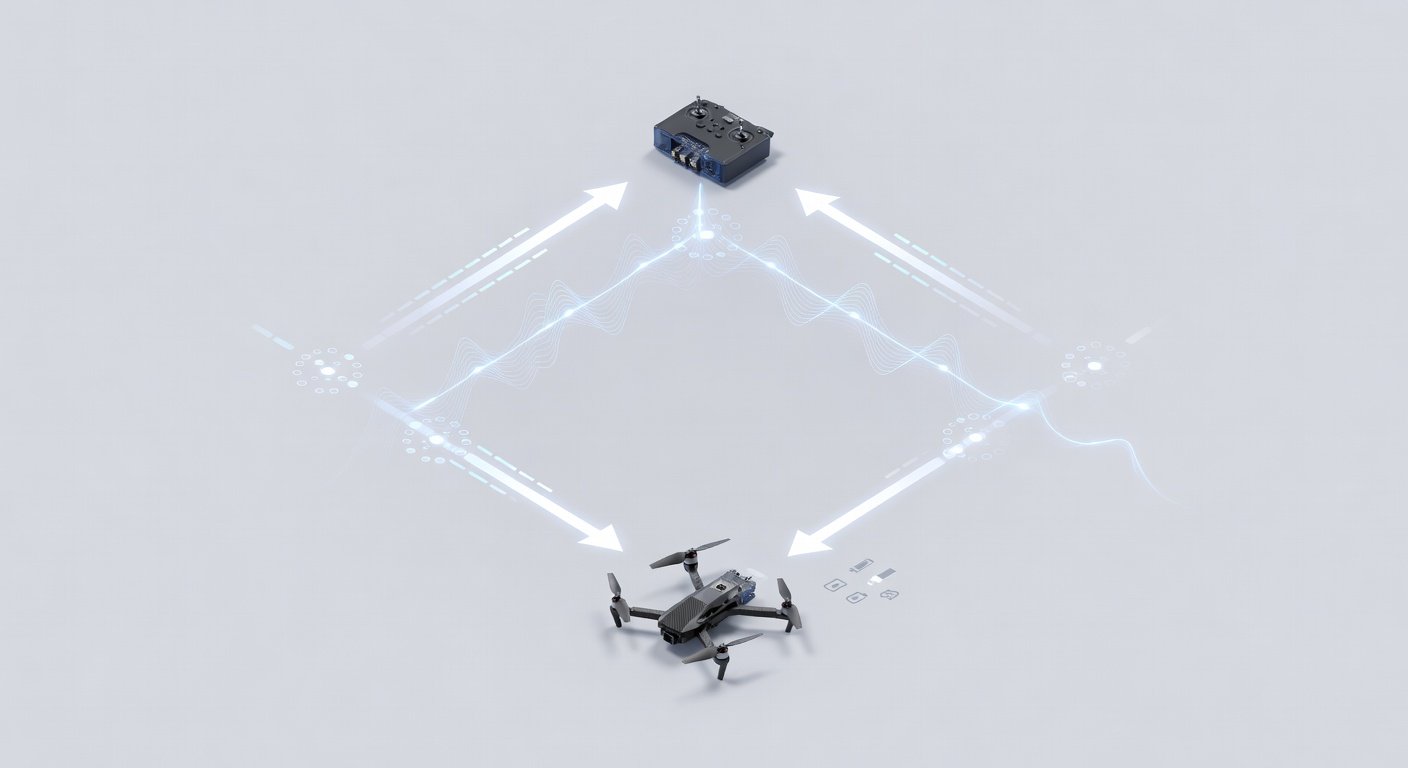
ExpressLRS distinguishes itself through several technical advantages that resonate with FPV pilots. The system offers multiple link rates—50Hz, 150Hz, and 250Hz—allowing you to balance latency against range and power consumption based on your flying style. Freestyle pilots often prefer 150Hz for smooth cinematic footage and extended flight time, while racers gravitate toward 250Hz for maximum responsiveness. The protocol includes telemetry feedback, sending real-time data from your quadcopter back to the transmitter, including RSSI (signal strength), battery voltage, and flight controller diagnostics. This bidirectional communication eliminates the need for separate telemetry modules, reducing weight and complexity. ExpressLRS also supports over-the-air (OTA) updates, meaning you can upgrade your receiver firmware without physically connecting it to a computer—a convenience that traditional systems rarely offer.
Low Latency Performance
Latency is the invisible enemy of precise FPV control. ExpressLRS achieves its low-latency advantage through efficient packet structure and optimized radio timing. At 250Hz link rate, the system transmits control inputs every 4 milliseconds, compared to traditional systems that might take 15-20ms per cycle. This difference compounds across a flight—over the course of a 5-minute race, the cumulative advantage of lower latency translates to cleaner lines, tighter gates, and faster lap times. The protocol’s architecture prioritizes control channels (throttle, pitch, roll, yaw) over lower-priority telemetry data, ensuring your stick inputs always reach the flight controller with minimal delay. Pilots upgrading from legacy systems frequently report that their flying improves noticeably within the first few packs, simply because their muscle memory finally matches their visual feedback.
Open-Source and Community-Driven
Unlike proprietary radio systems controlled by a single manufacturer, ExpressLRS is open-source software running on open hardware designs. This transparency means the entire FPV community can inspect the code, identify bugs, and contribute improvements. Hardware manufacturers can design their own ELRS transmitters and receivers without licensing fees, creating genuine competition that drives innovation and keeps prices competitive. The community maintains detailed documentation, firmware repositories, and configuration tools on GitHub, ensuring long-term support regardless of any single company’s business decisions. This model has proven resilient—even if one manufacturer discontinues their ELRS product line, dozens of others continue development. For hobbyists, this means your investment in ELRS equipment won’t become obsolete when a manufacturer shifts focus to a new protocol.
Why FPV Pilots Are Switching to ExpressLRS
The migration toward ExpressLRS has accelerated dramatically over the past two years, driven by practical advantages that directly impact flying experience and equipment costs. Pilots upgrading from Frsky, TBS Crossfire, or Spektrum systems consistently cite three primary reasons: superior latency, lower total system cost, and the freedom of open-source development. A complete ExpressLRS setup—transmitter module, receiver, and antenna—can cost 40-50% less than equivalent Crossfire equipment while delivering comparable or superior performance. This price advantage has democratized high-performance FPV flying, making premium radio systems accessible to hobbyists who previously couldn’t justify the expense. Beyond economics, pilots appreciate the philosophical shift toward transparency; knowing that their radio system’s development isn’t controlled by a corporation with quarterly earnings pressure creates confidence in long-term viability.
Cost Advantage Without Compromising Performance
ExpressLRS receivers cost $15-30, while equivalent TBS Crossfire receivers run $50-80. Transmitter modules follow similar pricing: ELRS modules from manufacturers like Radiomaster and Happymodel cost $40-60, compared to $100+ for Crossfire modules. For a pilot maintaining multiple quadcopters or operating a fleet for racing events, this cost differential becomes substantial. A racing team equipping five drones with ELRS saves hundreds of dollars compared to Crossfire, money that can be redirected toward better flight controllers, ESCs, or camera equipment. The performance gap between ELRS and premium competitors has narrowed to the point where price becomes the decisive factor for most hobbyists. Professional pilots and equipment reviewers increasingly acknowledge that ELRS delivers 90% of Crossfire’s performance at 50% of the cost, making the business case for switching overwhelming for budget-conscious builders.
Expanding Hardware Ecosystem
The ELRS ecosystem has matured dramatically, with multiple manufacturers producing compatible transmitters, receivers, and antennas. Radiomaster, Happymodel, and Eachine all offer ELRS-compatible hardware, creating genuine consumer choice. Popular flight controllers like the Betaflight F4, F7, and H7 variants now include ELRS receiver connectors, eliminating the need for adapters or custom wiring. ESC manufacturers have integrated ELRS telemetry support, allowing you to monitor motor temperatures, current draw, and voltage from your transmitter. This ecosystem maturation means new pilots can build a complete ELRS system without special technical knowledge or workarounds. The availability of spare receivers and modules at competitive prices through retailers like GetFPV and RaceDayQuads means you’re never stranded if equipment fails mid-season. This accessibility has created a positive feedback loop where more pilots adopting ELRS drives more manufacturers to support it, further improving the ecosystem.
ExpressLRS vs. Traditional Radio Systems
Understanding how ExpressLRS compares to established alternatives clarifies why the transition makes sense for many pilots. Frsky systems, once the FPV standard, suffer from aging hardware and limited development momentum. TBS Crossfire remains the premium alternative, offering exceptional range and reliability, but at a price point that limits accessibility for casual pilots. Spektrum systems excel in traditional RC applications but lack the low-latency optimization that FPV flying demands. ExpressLRS doesn’t necessarily outperform Crossfire in every metric—range can be slightly shorter depending on antenna configuration—but it matches or exceeds performance in latency, the metric that matters most for competitive flying. The philosophical difference is crucial: Crossfire is a closed system where TBS controls development priorities, while ELRS is a community platform where pilots collectively shape the protocol’s evolution. For pilots who value transparency, cost-effectiveness, and long-term independence from manufacturer decisions, ELRS represents a fundamental shift toward user empowerment.
How to Get Started With ExpressLRS
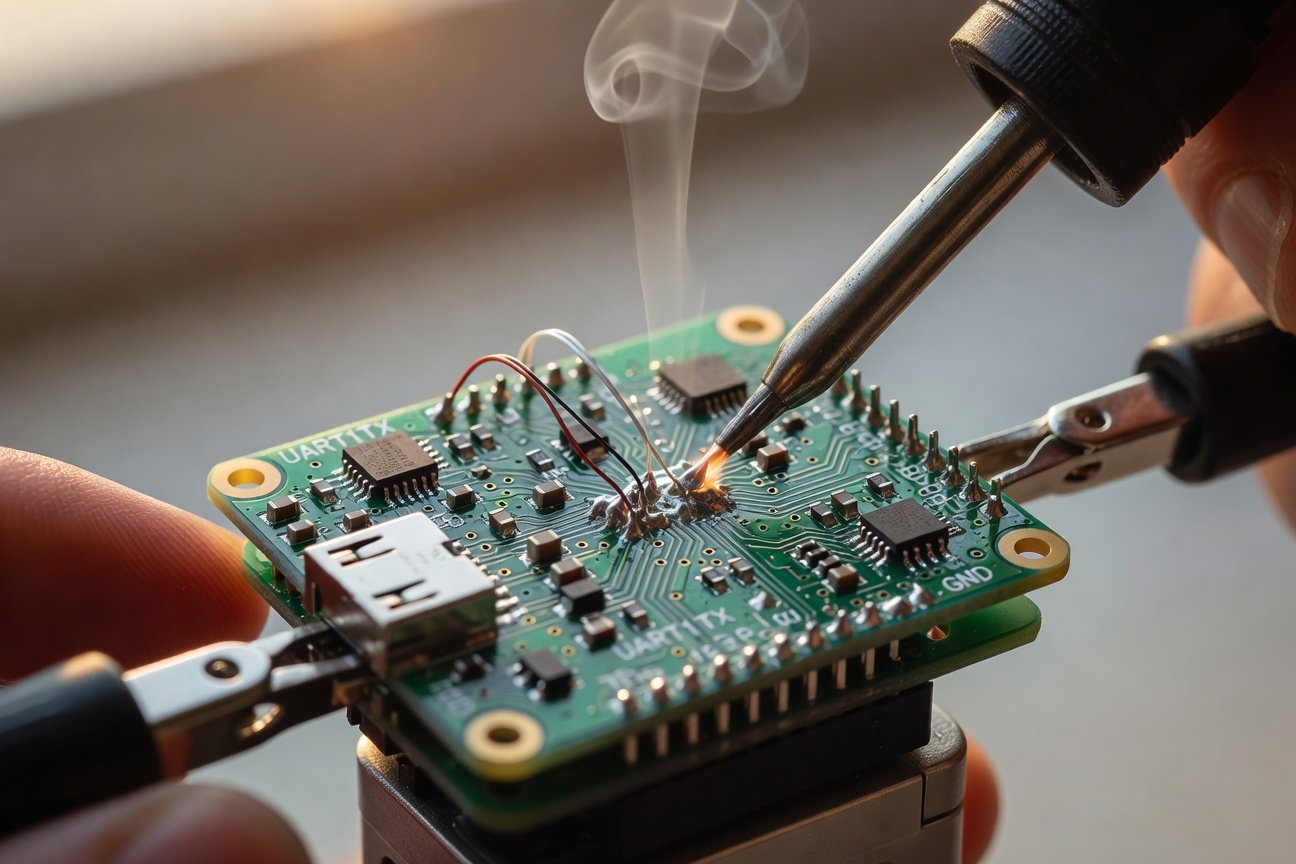
Setting up your first ExpressLRS system requires three core components: a compatible transmitter (radio), a transmitter module, and a receiver. If you already own a radio like the Radiomaster TX16S or Jumper T-Pro, you can purchase an ELRS module separately and install it into your transmitter’s module bay—a 10-minute process requiring no soldering. The module connects via a standard protocol interface, and most modern transmitters support multiple module types, so you’re not locked into a single ecosystem. The receiver mounts inside your quadcopter, connected to your flight controller’s UART port or dedicated receiver connector. Installation involves soldering four wires (power, ground, RX, TX) or using pre-soldered connectors if your flight controller supports them. Configuration happens through your transmitter’s menu system and the flight controller’s Betaflight configurator, where you select ELRS as your receiver protocol and bind the receiver to your transmitter module. The entire process, from unboxing to first flight, typically takes 30-45 minutes for someone with basic soldering experience.
Choosing Your First ELRS Setup
If you’re starting from scratch without an existing transmitter, the Radiomaster TX16S Mark II represents the best entry point for ELRS pilots. It includes an integrated ELRS module, eliminating the need for separate purchases, and costs around $200-250. The TX16S has become the de facto standard for FPV racing and freestyle, with extensive community support and hundreds of YouTube tutorials. For budget-conscious builders, the Jumper T-Pro offers similar functionality at a lower price point, though with a smaller screen and fewer physical controls. Both transmitters run OpenTX firmware, the same software used by the FPV community for decades, ensuring compatibility with your existing knowledge and muscle memory. Once you’ve selected your transmitter, pair it with a quality ELRS receiver—the Happymodel EP2 or Radiomaster RP4TD are reliable options available from GetFPV and RaceDayQuads. Budget approximately $300-400 for a complete ELRS transmitter setup if purchasing new, or $80-120 if upgrading an existing radio with an ELRS module.
Binding and Configuration Steps
Binding your ELRS receiver to your transmitter module is simpler than legacy systems. Power on your transmitter with the ELRS module installed, navigate to the ELRS menu (usually accessed through the transmitter’s main interface), and select ‘Bind.’ Simultaneously power on your quadcopter with the receiver installed, and the two devices establish a secure connection within seconds. Unlike Frsky or Crossfire systems that require complex bind procedures, ELRS uses a straightforward handshake that works reliably across different manufacturers’ hardware. Once bound, configure your flight controller to recognize ELRS as the receiver protocol. In Betaflight, navigate to the Receiver tab, select ‘ELRS’ from the serial receiver protocol dropdown, and assign the appropriate UART port where your receiver is connected. Save the configuration and reboot the flight controller. Perform a range check before your first flight—stand 10 meters from your quadcopter with the transmitter powered on, and verify that the receiver maintains signal lock. This sanity check takes two minutes and prevents mid-flight signal loss surprises.
Common Questions About ExpressLRS Setup
New pilots often encounter the same questions when transitioning to ELRS, and understanding these points smooths the setup process. Many worry about compatibility—will an ELRS receiver work with their existing flight controller? The answer is almost always yes; virtually every modern flight controller includes a UART port that supports serial receiver protocols. Some flight controllers feature dedicated ELRS connectors with pre-soldered headers, eliminating soldering entirely. Others ask about range: ELRS achieves 20-40km range depending on antenna quality, link rate, and environmental interference, matching or exceeding traditional systems for typical FPV flying distances. The concern about latency at distance is valid—ELRS uses adaptive link rates that automatically reduce from 250Hz to 150Hz or 50Hz if signal quality degrades, sacrificing some responsiveness to maintain control authority. This adaptive behavior is transparent to the pilot and represents a thoughtful compromise between performance and reliability.
The Future of ExpressLRS in FPV
ExpressLRS development continues accelerating, with the community actively working on improvements that will further enhance performance and accessibility. Future firmware updates promise even lower latency at certain link rates, improved packet efficiency for extended range, and enhanced telemetry bandwidth for richer flight data. Hardware manufacturers continue expanding the receiver and module lineup, with new options entering the market quarterly. The protocol’s open-source nature ensures it will remain relevant regardless of market consolidation or manufacturer decisions—if one company stops supporting ELRS, the community can fork the codebase and continue development independently. This resilience contrasts sharply with proprietary systems that depend on corporate commitment. For pilots investing in ELRS equipment today, the confidence that their investment remains viable for years comes from knowing that hundreds of developers worldwide have a vested interest in the protocol’s success. The trajectory suggests ELRS will become the dominant FPV radio system within the next 2-3 years, not through corporate marketing but through genuine technical merit and community momentum.
Frequently Asked Questions
Is ExpressLRS compatible with my existing flight controller?
Nearly all modern flight controllers support ELRS through a UART serial port. Betaflight, iNav, and other popular firmware platforms include native ELRS support. Some flight controllers feature dedicated ELRS connectors with pre-soldered headers for easier installation. Check your flight controller’s documentation or the ELRS compatibility list to confirm UART availability.
How does ExpressLRS latency compare to TBS Crossfire?
At 250Hz link rate, ExpressLRS achieves latency comparable to or better than Crossfire, typically 50-150ms depending on configuration. Both systems prioritize control responsiveness for FPV flying. The practical performance difference is negligible for most pilots; Crossfire’s advantage lies in range and reliability at extreme distances rather than latency.
Can I use ExpressLRS receivers with multiple transmitters?
Each ELRS receiver binds to a single transmitter module, similar to traditional radio systems. However, you can rebind a receiver to a different transmitter if needed. This flexibility allows you to use the same receiver across multiple transmitters by rebinding, though not simultaneously.
What’s the typical range of an ExpressLRS system?
ELRS achieves 20-40km range depending on antenna quality, link rate, and environmental factors. At 250Hz link rate, range is typically 15-25km in suburban areas. At lower link rates (50Hz), range extends to 40km+. This matches or exceeds traditional FPV systems for typical flying distances.
Do I need soldering experience to install ExpressLRS?
Basic soldering helps, but many receivers and flight controllers now feature pre-soldered connectors that eliminate soldering entirely. If your flight controller has a dedicated ELRS connector, installation requires only plugging in the receiver. For UART connections, soldering four wires takes 10-15 minutes with beginner-level skills.
Ready to Upgrade to ExpressLRS?
Making the switch to ExpressLRS is straightforward, and the performance gains justify the transition. Whether you’re upgrading an existing transmitter with an ELRS module or building a complete system from scratch, the community support and hardware availability ensure a smooth experience. Start by identifying your current setup, then explore compatible ELRS modules and receivers through trusted retailers like GetFPV and RaceDayQuads. If you have questions about compatibility with your specific flight controller or transmitter, the FPV community forums and Discord channels are welcoming spaces where experienced pilots help newcomers navigate the transition. Your first ELRS flight will demonstrate why thousands of pilots have already made the switch.